跨境独立站开店
Tips for efficiently conducting Shopify theme reviews
The Shopify Theme Store has opened for partners, expanding the opportunities for developers to offer their themes to over 1.7 million merchants worldwide. Since the Theme Store had been closed since 2018, this is a golden opportunity to establish yourself as a trusted Shopify theme developer by listing your themes. This article explains the "review process" involved in submitting your themes to the Shopify Theme Store.
The Shopify Theme Store has opened for partners, expanding the opportunities for developers to offer their themes to over 1.7 million merchants worldwide. Since the Theme Store had been closed since 2018, this is a golden opportunity to establish yourself as a trusted Shopify theme developer by listing your themes. This article explains the "review process" involved in submitting your themes to the Shopify Theme Store.
The Shopify Theme Store is now open to partners, expanding the opportunities for developers to offer their themes to millions of merchants worldwide. Since the Theme Store has been closed since 2018, this is a golden opportunity to list your themes and establish yourself as a trusted Shopify theme developer.
To list your theme on the Shopify Theme Store, it must first be approved by the theme review team. This is not a complicated process. Partners submit their themes for review, and the review team meticulously checks all items for any issues, deciding whether to approve or reject them based on the criteria.
In short, understanding what constitutes a good theme is the first step to success and will help avoid having your theme rejected. If a partner frequently fails to meet the requirements, their theme submissions may be suspended. It's best to be as prepared as possible.
This article explains the theme review process to help you prepare optimally.
Grow your business with the Shopify Partner Program
register
What theme should we build?
Preparing for success during the review phase begins even before you write the first bit of code.
Find a niche
Shopify is looking for unique themes with niche features. Themes that are just slightly modified versions of existing themes or that are too similar to other themes will likely not be approved.
Before designing your theme, identify your target industry and audience. Then, work on features that would be beneficial to that industry and audience. One way to find a niche is to check out trending products; this can give you inspiration regarding the type of industry you should target.
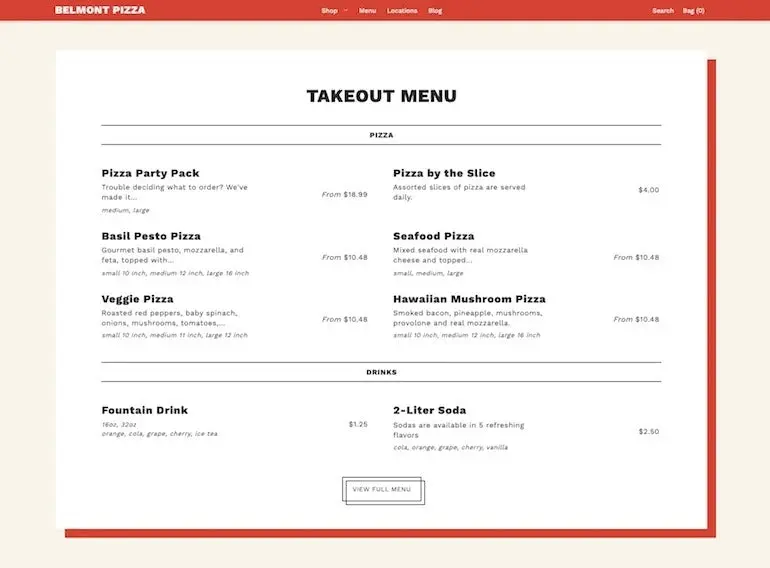
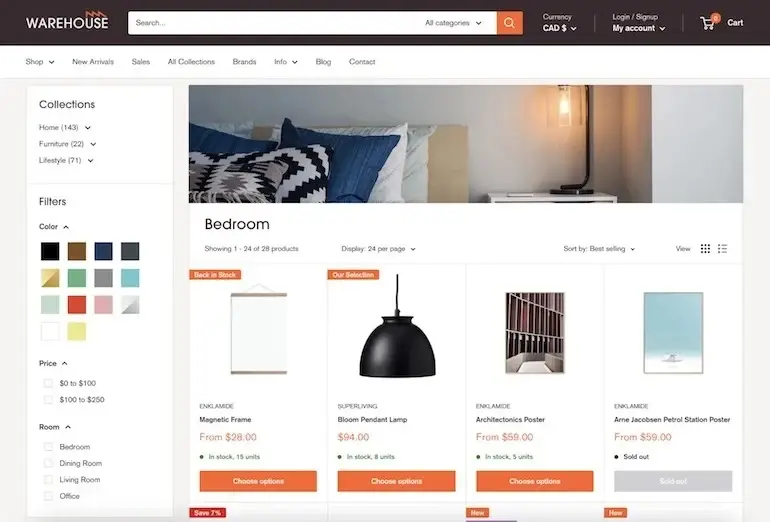
When creating a development store, be sure to reflect the audience and products that will be using the theme. This will clarify the theme's selling points and make the design shine. Foodie and Warehouse are two examples of excellent themes with intuitive names and niche features for specific merchants.
Foodie is a theme for the food industry. It has templates for homepage sections and custom collection pages that look like restaurant or cafe menus.
On the other hand, Warehouse is a theme created for merchants with large catalogs. This theme features advanced collection filters and robust product page functionality, and provides information to buyers and merchants through features such as an inventory tracker, shipping calculator, and "recently viewed items."
Both are excellent examples of themes that address specific niche markets.
Please also refer to: Shopify Online Store 2.0: Its Significance for Developers
Theme review stage
Once a theme is submitted, the review team gets to work. The theme review has three stages, and at each stage, they verify whether both merchants and buyers will get the best possible experience.
1. Theme Requirements
All theme requirements are outlined in a single checklist in the documentation (in English). Please carefully review this checklist to ensure that all items are met. Partners often overlook Lighthouse performance scores, accessibility scores (details of accessibility requirements can be found in the blog (in English)), and other mandatory platform features.
All features should function correctly and without bugs. The review team will first investigate your developer store. If any items on the checklist are missing from your developer store or theme, the review team will send the theme back for correction.
2. Design and UX Review
Once the requirements checklist is cleared, we move on to a detailed review of the design and user experience (UX). We seek a cohesive and consistent theme.
The review team meticulously checks the visual aspects of accessibility, verifying the clarity of the content, such as color contrast and spacing. Ensure your theme passes the color contrast test. Both text and keyboard focus must be easily visible and have sufficient contrast against the background. Sufficient white space is required between elements, especially around touch elements. You can find more details in the accessibility requirements article (in English).
We also need to consider the merchants and customers who will be using the theme. How will the theme handle various languages and syntaxes (long words, right-to-left text, etc.)? Will it work with languages other than English?
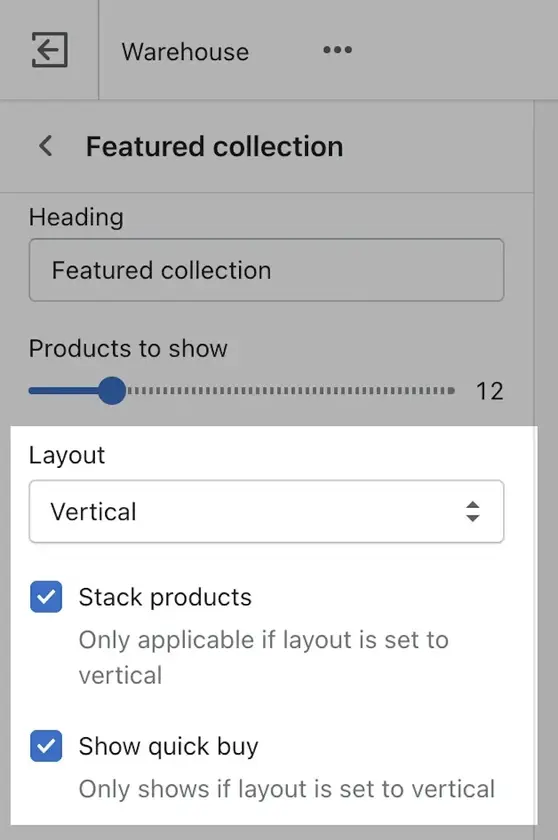
Finally, a theme needs an intuitive user interface (UI) that guides merchants in their design decisions. For example, consider the following theme settings for Warehouse.
The above settings allow merchants to change the layout of products in the featured collections section and also enable the "Stack products" and "Show quick buy" buttons. It is also explicitly stated that these settings are only effective when the layout is set to vertical.
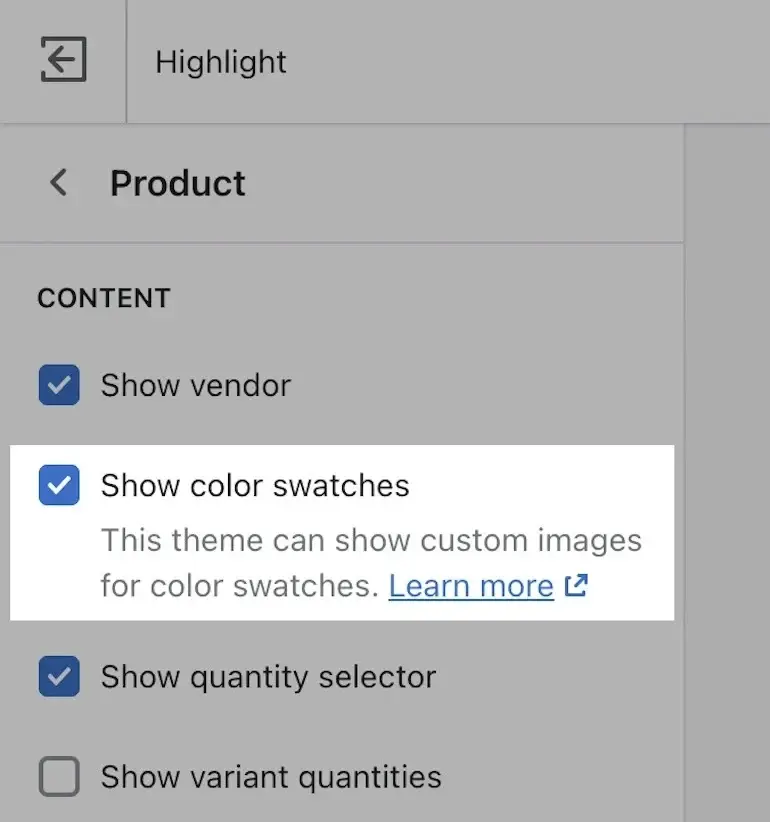
When incorporating niche features that require advanced configuration into a theme, provide clear instructions on how to implement them, either within the theme settings or through links to documentation. For example, if a theme allows users to display custom color swatches, the setup method should be documented and accessible from the theme settings. Highlight is a good example of a theme that provides clear instructions for configuring niche features, including a "Learn More" button with a link to the documentation page.
3. Durability Review
In the final stage of the review process, we test how well the theme can handle extreme cases and radical scenarios. Themes often fail in tests when dealing with the following scenarios:
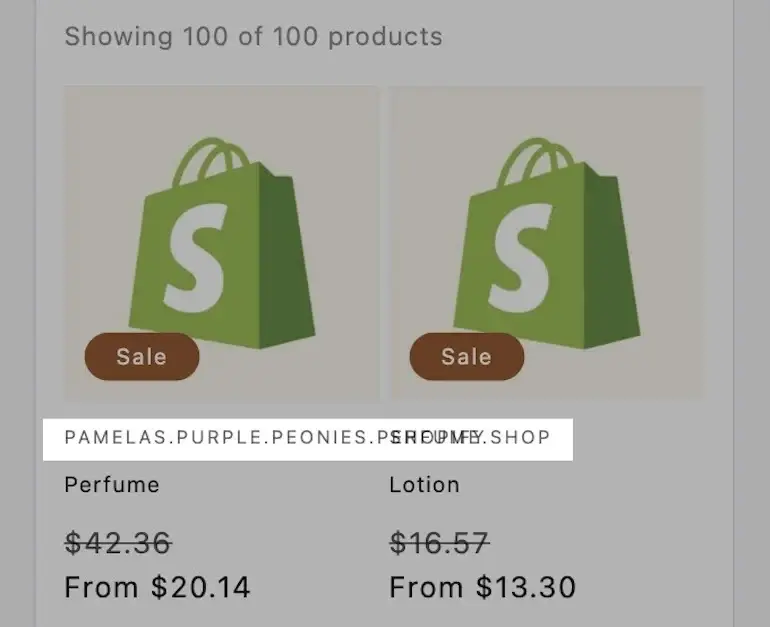
- 30-character words: Long sentences should not overflow or overlap with the elements of the theme.
- Duplicate sections: For example, it is required that adding duplicate featured products does not break the theme.
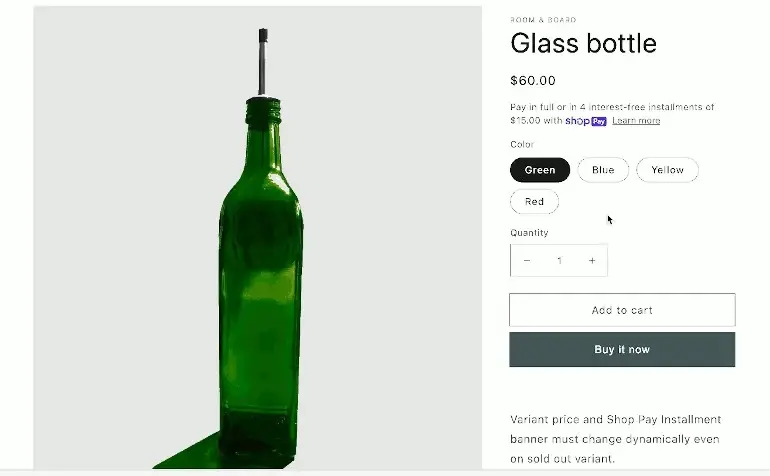
- Product Variation Changes: Variant objects, buttons, and banners (Shop Pay Installments, pickup availability) must dynamically change when a different variation is selected.
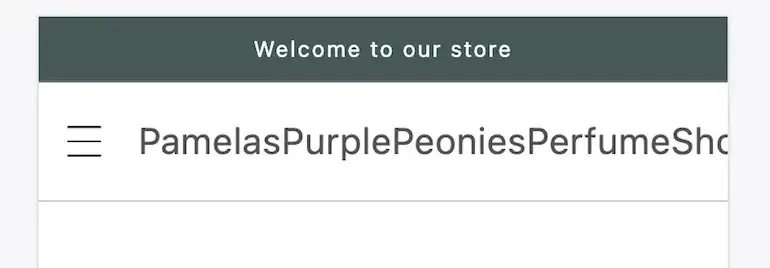
- Various image quality and aspect ratios: The theme needs to support a variety of image quality, and different image aspect ratios should not disrupt the layout.
- Loading Time: Avoid theme breakage due to heavy JavaScript loading times. For example, slideshows and event-driven features may fail if loading times are too long.
4. Addressing Issues in the Review Process
It is your responsibility to ensure that the submitted topic is of high quality and contains as few identifiable bugs or design/UX flaws as possible. Throughout the review process, you will receive email notifications with feedback links at each stage. These links allow you to comment and address bugs and issues.
If a partner is determined to be unable to pass the thorough checks of the review process, they will be required to withdraw from the process and resubmit their work.
Let's prepare a theme that will be successful.
We hope this quick guide will make your next theme review easier. Double-check that your theme meets all the requirements on the checklist. Is it highly visible, well-formatted, and easy for all users to use, wherever they are? Follow the cheat sheet provided in this article to successfully submit your theme!
Original text: Pamela Gunawan Translation: Nozomi Fukatsu
Share this article
- Share on Facebook
- Share on X
- Share on LinkedIn