跨境独立站开店
Workflow automation for enterprise e-commerce | Strategies for improving operational efficiency and maximizing ROI for large companies
This book addresses the operational efficiency challenges faced by companies with annual sales exceeding 1 billion yen. It explains an enterprise-grade workflow strategy that automates order processing, inventory management, and fraud detection to reduce labor costs and strengthen compliance.

What exactly is a workflow?
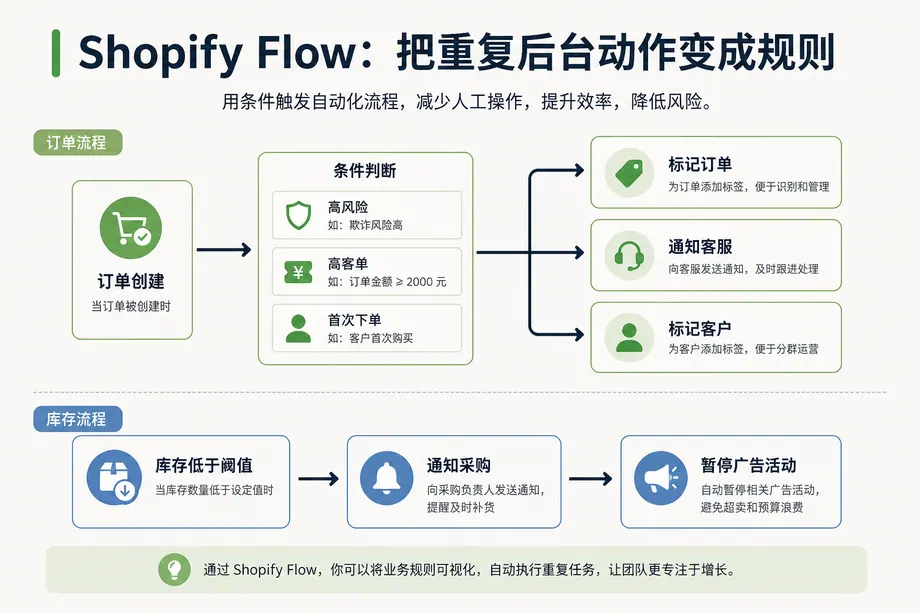
In essence, a workflow refers to a series of steps taken to achieve a specific objective. For example, a workflow for "handling a new order" consists of individual tasks such as "payment confirmation," "inventory allocation," "shipping label printing," and "shipping notification to the customer." The following is an example of such a workflow:
Defining Workflow Automation
Workflow automation is a system that uses software and technology to automate a series of tasks that were traditionally performed manually. In the e-commerce field, this includes tasks such as order tracking, receipt issuance, and customer support.
Why is workflow automation important now?
The adoption of AI and automation technologies is progressing rapidly and has become a crucial factor in determining competitive advantage in business. If you are still performing many tasks manually or in an ad-hoc manner, you may be left behind by your competitors.
Three types of workflow automation
Workflow automation can be broadly classified into the following three types based on its mechanism: