 跨境独立站开店
What is upselling? Meaning and effective methods
This article explains what upselling is, how it differs from cross-selling, and how and when it is most effective, using examples.





This article explains the basics of upselling, how it differs from cross-selling, provides examples of upselling, discusses opportunities for upselling, and outlines important points to consider.
Upselling is an effective sales strategy for increasing sales. This sales technique, which is also effective as a marketing strategy for e-commerce sites, can improve profit margins if used appropriately.
However, upsell proposals that customers perceive as pushy can create a negative image, increasing the risk of damaging trust and losing deals. It's likely that many businesses are hesitant to make upsell proposals due to concerns about damaging their image with customers.
This article provides an overview of upselling, along with examples, opportunities for upselling, and important points to keep in mind. Please use it as a reference.
What is an upsell?
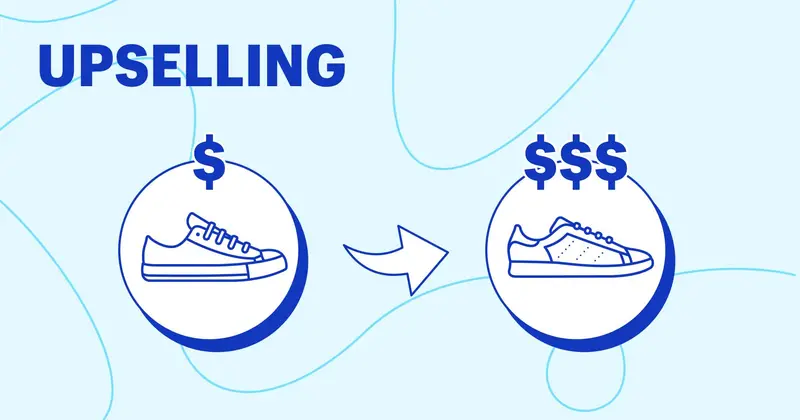
Upselling refers to a sales technique where a customer is offered a higher-priced, higher-quality product or service than what they have already purchased or are considering purchasing.
While the goal is to increase the average customer spend, effective upselling also helps customers succeed, improves their experience, and ultimately increases brand trust and loyalty.
The difference between upselling and cross-selling
The difference between upselling and cross-selling lies in their respective definitions. Specifically, they include the following:
- Upselling: A sales technique that involves suggesting and purchasing a higher-priced, higher-quality product or service than what the customer has already purchased or is considering purchasing.
- Cross-selling: A sales technique that involves suggesting other products or services related to what a customer has already purchased or is considering purchasing, in order to encourage them to buy those items as well.
While upselling involves offering high-priced, high-quality products, cross-selling aims to increase the average customer spend by suggesting related products and increasing the number of items purchased. Both methods aim to increase the average customer spend.
Benefits of Upselling
- Increased Average Order Value (AOV): As the average order value increases, it becomes possible to aim for increased sales through upselling and an increase in Customer Lifetime Value (CLV).
- Enhancing brand value: By providing high-quality products and services that meet customer needs, we gain customer trust.
- Improved profit margins: Since it is possible to increase total sales without increasing the number of customers, improved profit margins are expected.
Examples of upselling
- Subscription services: At the stage when customers decide whether to continue their subscription, such as during contract renewal, the appeal of higher-tier plans that meet their needs is communicated, encouraging continued use of high-quality services. Example: Offering a higher-tier plan with no restrictions on features or number of lessons for a language learning app subscription.
- Leasing: Proposing new products or higher-end models that meet customer needs at opportune times, such as before the contract expires. Example: Introducing a new model of desk chair currently leased in an office furniture lease.
- SaaS (Software as a Service): The strategy involves offering a free plan to introduce and allow users to experience the tool's usefulness before encouraging them to upgrade to a more convenient paid plan. Example: Offering a free chat tool and then recommending a paid plan that includes features like chat history.
- E-commerce site: Displays higher-end models of products the user is viewing under "Also Recommended" to encourage purchase. Example: An e-commerce site recommends higher-end models of products that the user has added to their favorites.
When to make an upsell offer
The timing for making upsell proposals differs slightly between business-to-business (B2B) and business-to-consumer (B2C) sales scenarios. Opportunities for upselling in each scenario include the following:
- B2B: Contract renewal, when issues are identified, before the end of the fiscal year, immediately after the end of the fiscal year when new budgets are added, and during the budget preparation period (3-6 months before the end of the fiscal year).
- B2C: When you first visit the shop, when you add items to your favorites, when you add items to your cart, after you make a purchase, etc.
E-commerce platforms like Shopify have apps and features that recommend higher-end models when users visit a product page or add items to their cart, making it easy to implement effective upselling by utilizing these features.
Upselling after purchase is effective with digital content, for example. When upselling after the purchase of a physical product, it's a good idea to offer extended warranties or premium support.
Key points for effective upselling
- We propose products that can solve the problems our customers face.
- Consider whether trust has been built.
- Offer multiple options and make a proposal.
- Offer free shipping or discounts.
Accurately understand the customer's challenges and propose products that can solve them. If you disregard the customer's budget or propose products that don't solve their problems simply because they are higher-end models, the customer will feel pressured and lose trust.
It's important to avoid suggesting products that are significantly more expensive than the items the customer wants to buy, and to clearly explain why a particular product is recommended, taking into account the customer's situation and challenges.
It is also effective to present case studies and reviews from other customers who have solved similar problems through the product.
It's also important to consider whether you've built trust with the customers you want to upsell to. Whether a customer will consider an upsell proposal depends not only on the proposal itself, but also on the level of trust that has been established between them and the company making the proposal.
Always be mindful of building long-term relationships with your customers, and communicate with them consistently and diligently on a regular basis. If customers perceive that you put them first, they are much more likely to listen to your upsell proposals.
When proposing an upsell, offer the customer multiple options. If you force a "yes or no" choice, the customer may perceive it as high-pressure sales and feel psychologically pressured. However, by allowing the customer to choose, you encourage positive consideration.
An effective technique for upselling is using the Goldilocks principle (or the three-tiered pricing system). This principle states that when presented with three options, people tend to avoid the extremely high price (highest) and the lowest price (lowest), and choose the middle price (middle). Prepare by outlining the advantages and disadvantages of each plan and allowing customers to compare them based on their needs before proposing an upsell.
Offering free shipping or discount coupons can also lead to successful upselling. Providing a lower price than the regular price can alleviate customers' cost concerns and lower the barrier to purchase. Limited-time discounts, in particular, can create a sense of "I should buy it now," encouraging purchases.
Appropriate upselling is a strategy that not only increases sales and profits, but also enhances brand value through a positive customer experience and reduces customer acquisition costs.
To successfully upsell, it's essential to take an appropriate approach that takes the customer's situation into account, such as making proposals that meet their needs and implementing upsells at times like contract renewal or when they need to allocate a budget. Building trust by maintaining consistent and steady contact with customers on a regular basis is also crucial for successful upselling. Furthermore, be creative with your proposals, such as offering multiple options or suggesting discounts.
FAQ
What is upselling?
What is the difference between upselling and cross-selling?
The difference between upselling, which involves suggesting high-priced, high-quality products, and cross-selling, which aims to increase the average customer spending by suggesting related products and increasing the number of items purchased, lies in the fact that cross-selling involves suggesting related products.
When should upselling be done?
- B2B: Contract renewal, budget allocation, timing of identifying issues, etc.
- B2C: When adding to favorites, when deciding to purchase, after purchase, etc.
What are some precautions to take when implementing an upsell strategy?
- We do not disregard the customer's budget.
- We do not propose products that do not contribute to solving the problem.
- Don't make it an either/or situation.
- Wait for the right timing
Share this article
- Share on Facebook
- Share on X
- Share on LinkedIn



