 跨境独立站开店
Marginal cost: Definition, formula, and examples
Marginal cost refers to the increase or decrease in cost resulting from producing one more unit or providing services to one more customer, and is also called incremental cost.

Marginal cost refers to the increase or decrease in cost resulting from producing one more unit or providing services to one more customer, and is also called incremental cost.
Marginal cost refers to the increase or decrease in total production cost incurred by producing one additional product. This is also known as incremental cost.
Marginal cost is calculated when enough quantity is produced to cover fixed costs and production reaches the break-even point. At this point, future expenses consist only of variable or direct costs.
Knowing your marginal cost allows you to optimize pricing and improve your store's profitability.
By learning the fundamentals of marginal cost and understanding your own company's marginal cost, you can build a more profitable business.
What is marginal cost?
Marginal cost represents the change in total production cost resulting from producing one additional unit. It is calculated by dividing the change in production cost by the change in quantity.
Marginal cost can be used to determine optimal production levels and pricing. Marginal cost includes both fixed and variable costs. Investors also use it to forecast profits and growth as a company grows.
Key points
- Marginal cost refers to the additional cost incurred to produce one additional unit of a product or service.
- By analyzing marginal costs, you can assess profitability and make product-related decisions, including pricing.
- Marginal cost is typically represented on a graph as a U-shaped curve. In the initial stages of increasing production, marginal cost decreases as efficiency improves.
- A company that maximizes profits will continue production until marginal cost equals marginal revenue (MC=MR).
- When marginal costs decrease, it means that companies can produce more goods or services without significantly increasing their costs.
Marginal cost formula
The marginal cost can be calculated as follows:
Marginal cost = Change in total cost / Change in total quantity
The formula for calculating marginal cost is MC = ΔTC/ΔQ.
- MC represents marginal cost.
- ΔTC represents the change in total cost.
- ΔQ represents the change in total quantity.
How to calculate marginal cost
For example, let's say you run an e-commerce business selling handmade jewelry. Initially, you produce 100 bracelets per day, and your total cost (materials, labor, etc.) is 5,000 yen.
We decide to produce one more bracelet, bringing the total to 101. This increases the total cost to 5,050 yen. This cost increase (50 yen) is the marginal cost.
So, how do we calculate that?
The procedure for calculating marginal cost is as follows:
1. Identify changes in quantity.
We track changes in the quantity of products. Normally, this is 1 unit, but it may vary depending on the amount of additional products being added.
2. Understand the changes in total costs.
Identify the change in total cost when production volume changes. Subtract the new total cost after the production change from the initial total cost.
3. Calculate marginal cost
Once you have these two values, you can calculate the marginal cost by dividing the change in cost by the change in quantity.
Using the example above, the calculation is as follows:
- Change in quantity = 101 bracelets - 100 bracelets = 1 bracelet
- Change in total cost = 5,050 yen - 5,000 yen = 50 yen
- Marginal cost = 50 yen / 1 = 50 yen
The minimum cost to produce one additional bracelet is 50 yen.
If marginal costs are lower than the selling price, it is rational to increase production volume.
However, if marginal costs are high, it may be better to maintain or reduce production levels. If you plan to increase production, you may also consider raising prices.
Example of marginal cost
Let's say you run an e-commerce business selling handmade jackets. Currently, you produce 50 jackets a week, and the cost is 20,000 yen.
We've decided to increase production by 10 units per week, bringing the total to 60 units. This will raise the total cost to 24,500 yen.
The maximum cost for 10 additional leather jackets is as follows:
- Change in quantity = 60 items - 50 items = 10 items.
- Change in total cost = 24,500 yen - 20,000 yen = 4,500 yen.
- Marginal cost = 4,500 yen / 10 = 450 yen.
The marginal cost to produce one additional jacket (in units of 10) is 450 yen.
Since the marginal cost of an additional jacket is 450 yen, you can set a higher price for the jacket to ensure profitability.
For example, if you sell each jacket for 9,000 yen, you can make a profit of 4,500 yen per jacket. By producing and selling 10 jackets, you can increase your profit by another 4,500 yen.
Marginal cost curve
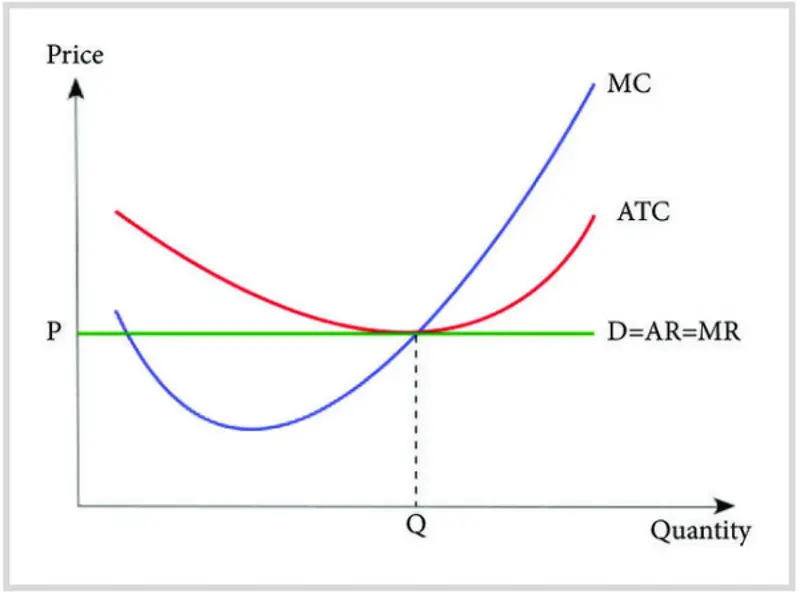
When marginal costs are plotted on a graph for different product quantities, they typically show a U-shape. Costs start high and are covered by fixed costs until production reaches the break-even point.
After that, costs remain low for a certain period, and then gradually rise as increased production requires spending on more employees and equipment.
The following is an example.
To create your own marginal cost curve, you need to take the following steps.
- Identifying cost factors: First, you need to understand the factors that affect costs, such as labor costs, raw materials, and delivery. These affect the marginal cost of production.
- Calculate the marginal cost at different production levels: Next, calculate the marginal cost when producing different quantities of goods.
- Plotting the curve: Once you have these values, plot them on a graph. The x-axis represents the quantity of product, and the y-axis represents the cost per unit.
- Analyzing the curve: Now you can analyze the curve for strategic decision-making. If you see economies of scale (decrease in marginal cost), you can increase production. If you see diseconomies of scale (increase in marginal cost), you need to reconsider further production expansion or look for ways to improve efficiency.
Generally, the price of a product should exceed its marginal cost. If it does not, you need to adjust your pricing strategy or find ways to reduce costs.
Marginal cost and marginal revenue
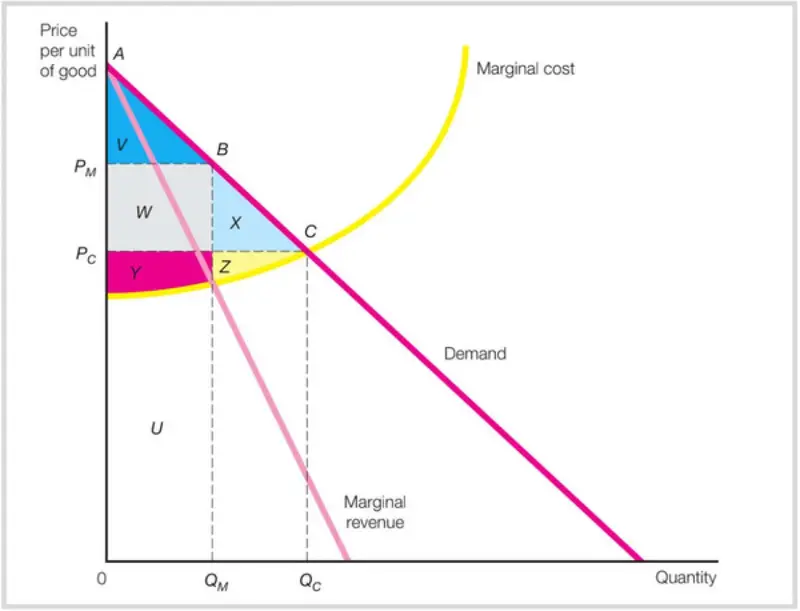
Marginal cost and marginal revenue work together to achieve maximum production. The ideal production level occurs when marginal cost equals marginal revenue (MC=MR).
However, these two concepts are different. Let's look at their definitions.
- Marginal cost: The additional cost incurred by producing one additional unit of a good or service.
- Marginal revenue: Additional revenue earned by selling one additional unit of a product or service.
In the graph below, marginal revenue is shown by the pink line at the bottom. The quantity at which marginal revenue and marginal cost intersect is the optimal sales quantity.
Marginal profit varies depending on market conditions. It may slope downward due to diminishing returns, or it may remain flat in the case of perfect competition.
In other words, if marginal revenue exceeds marginal cost, a business can increase its profits by selling more units.
To use this for the next production run.
Understanding marginal cost allows you to identify areas where costs can be reduced and efficiency improved. Analyzing production processes can lower costs per unit, increase cash flow, and enhance market competitiveness.
Frequently Asked Questions about Marginal Cost
How do you calculate marginal cost?
Marginal cost can be calculated using the following formula: Marginal cost = Change in total cost / Change in quantity.
What is the definition of marginal cost?
Marginal cost is a microeconomic concept that refers to the cost of producing one additional unit of a good or service. In e-commerce businesses, it includes other costs associated with the production and delivery of goods, such as material costs, labor costs, and shipping costs. Understanding marginal cost helps in determining optimal pricing for products and output levels for product lines.
What is the difference between marginal cost and average cost?
The difference between marginal cost and average cost lies in their calculation methods and what they represent. Marginal cost refers to the additional cost required to produce one more unit of product. Average cost is calculated by dividing the total production cost by the quantity produced, and represents the average cost per unit.
What is the difference between marginal cost and marginal revenue?
Marginal cost is the additional cost incurred to produce one additional unit. Marginal revenue is the additional revenue earned from selling one additional unit. These two work together to produce the appropriate quantity of goods to maximize profit.
Share this article
- Share on Facebook
- Share on X
- Share on LinkedIn



