 跨境独立站开店
Store operations | How to start a recycling business
A recycling shop can be a highly profitable business opportunity while contributing to the local community. Learn how to start a recycling business in this article.
A recycling shop can be a highly profitable business opportunity while contributing to the local community. Learn how to start a recycling business in this article.
A recycling shop is a type of retail business that resells used goods at a discounted price. They sell a variety of items, from vintage apparel to unique antiques.
Opening a second-hand shop is a great business opportunity, especially if you have a low initial investment. Not only can you acquire used goods at a much lower cost than buying new, but you can also contribute to your local community and support people who cannot afford new items.
Furthermore, it contributes to participating in the circular economy and reducing waste. Products that are resold will not end up in landfills as waste, and you can enter the recycling business market, which is projected to reach a market value of $82 billion (approximately 1,812 trillion yen) in the near future.
I want to start a recycling business, but where do I begin? This article will guide you through the process of starting a recycling business, from the basics to setting up a store.
How to start a recycling business
- Investigate the target market and regional competition.
- Create a business plan
- Register your recycling business and obtain the necessary licenses.
- Find a suitable place and sign a lease agreement.
- Procuring inventory of used goods
- Designing the layout and design of a recycling shop.
- Set the price of the product.
- Hire staff as needed.
- Set up a point-of-sale (POS) system.
- Marketing a recycling shop
- We will be holding a grand opening event.
- Continuously manage inventory and store operations.
1. Investigate the target market and regional competition.
Market research is a good indicator of the potential success of a recycling shop. Make sure the demographics of the area you've chosen match the typical customer base for a recycling shop.
By conducting surveys of local residents and utilizing data such as the average age and income levels of surrounding residents, potential businesses can be prioritized.
Remember that you don't necessarily need to set up a store in an area where recycling is popular. If your potential retail location is in a tourist area, you can target buyers who are visiting from afar.
2. Create a business plan.
A business plan is a document that details the overall vision of a recycling shop. It outlines the ultimate goal and the plan to achieve it, serving as a roadmap for growing the business.
The following elements are important to include in a business plan for a new recycling shop:
- Your brand story and the values you cherish
- Market research
- Products to be sold (including niche products)
- Financial plan
- Marketing plan
- Logistics and operational planning
👉 Download a business plan template.
3. Register your recycling business and obtain the necessary licenses.
Registering a new business is an important milestone for any entrepreneur. Once your business is officially registered, your recycling shop and you become separate legal entities, providing you with legal protection. There are also tax advantages, as items purchased to open your recycling shop can be deducted as business expenses.
Retail insurance is also necessary to protect yourself from legal issues once your store is open for business. Make sure you have insurance that covers situations such as customers being injured in your store, accidentally selling unsuitable items, or your store being trespassed on.
Finally, let's check whether you need a general business license or sales permit to open a recycling shop. Special licenses are required for regulated niche businesses, such as those selling age-restricted items like tobacco or alcohol.
4. Find a suitable place and sign a lease agreement.
The most important factor when starting a retail business is "location." The place where you set up your store will influence your marketing efforts to attract customers.
High-traffic areas significantly reduce marketing costs. An attractive window display could potentially draw in passersby.
However, busy places like shopping malls aren't always easily accessible. Some people prefer recycling shops that are easily accessible by public transport or stores with parking facilities.
The following is a helpful list of points to consider when searching for a store.
- Is the store easily accessible?
- Is it a safe area?
- How often do businesses in this region last?
- Are there any zoning regulations?
- Will it compete with other recycling shops in the area?
Once you find a potential retail space that meets your criteria, contact a real estate agent to arrange a viewing. Make sure there is enough space to manage inventory, process donations, and set up a checkout desk.
5. Procure inventory of used goods.
To make a profit in a new recycling shop, you need to acquire inventory at a price lower than your selling price. This is a difficult task. Buying new goods through the usual channels, such as wholesalers, doesn't fit the philosophy of a recycling shop.
Places where you can source inexpensive inventory for a recycling shop include:
- Donations: Ask customers to donate unwanted items to your store. You can set up a donation area in your store, place collection boxes in the community, or partner with local businesses that handle donations. This is a great way to get inventory for free.
- Estate Clearance Sale: When a homeowner passes away, downsizes in retirement, or moves, they may sell the contents of their home. You can find unique or valuable items that you don't want to donate, and negotiate with the owner to purchase them at a low price.
- Flea markets and garage sales: Visit local flea markets and community garage sales to find secondhand items that you can sell on your online recycling shop. You can find hidden treasures, especially if they are held in affluent areas.
- Auctions: High-value items are put up for auction and sold to the highest bidder. If you're planning to open a high-end second-hand shop or sell antiques, find a local auction house and bid on inventory you want to resell. However, since you'll need to add your own markup when reselling, bid a little lower than your estimated selling price.
6. Set the layout and design of the recycling shop.
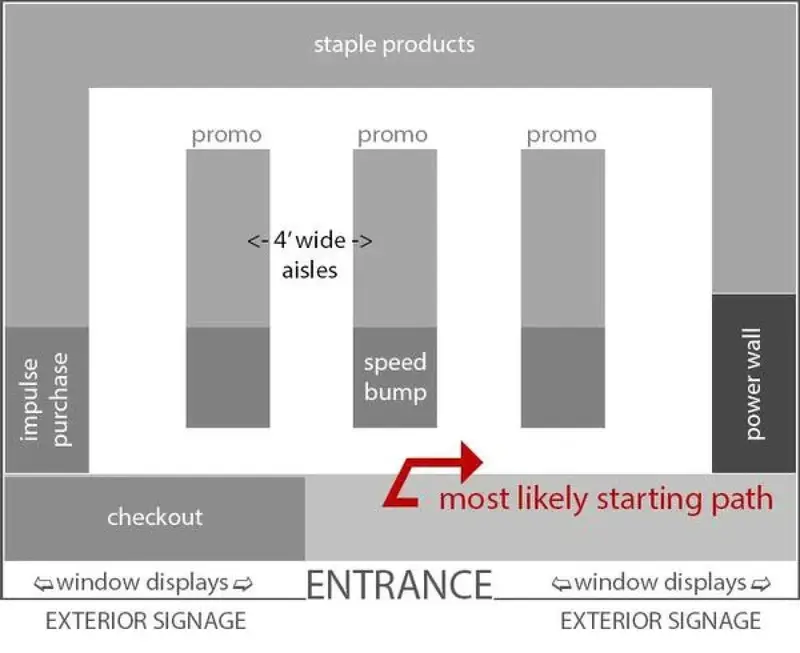
Before welcoming people into your recycling shop, think about the shopping experience you want to offer. A great store layout that makes recycling enjoyable will not only attract visitors but also encourage them to buy the second-hand items you're selling.
While there's no single "optimal" way to optimize retail store layouts, there are general guidelines for making the most of floor space.
- Create an eye-catching window display showcasing the most appealing recycled items.
- Do not place inventory in the first 5 to 15 feet (approximately 1.5m to 4.6m) from the entrance—this is called the "decompression zone."
- To prevent people from rushing past and missing out on products, we set up rest stops and stopping points.
- Use retail signage to make it easier to find the checkout counter.
- Place low-priced items and other products that are likely to be purchased on impulse near the checkout counter.
7. Set the price of the product.
Pricing used goods is a difficult task. While inventory is often sold below the suggested retail price (RRP), it's necessary to make a profit on the products being sold.
Profits should not only cover the cost of purchasing each product. Develop a retail pricing strategy that takes into account operating costs such as store rent, point-of-sale (POS) system subscriptions, and marketing expenses, ensuring profitability even after covering store expenses.
When setting prices for individual products, consider the following points:
- Quality: If there is obvious wear or damage, we may set the price considerably lower than the suggested retail price. High-quality items may command a premium price.
- Demand: If there is high demand for a particular product (supply cannot keep up), the price of the product will be set higher.
- Condition: Occasionally, items are valued higher than their original selling price, especially rare vintage items. For example, if a collector finds a vintage designer bag, they might pay an additional fee for a pre-owned item to add to their collection.
8. Hire staff as needed.
There are many aspects to running a recycling shop. Since it's not always possible to do everything yourself, some entrepreneurs hire retail staff before opening the store.
Note down the responsibilities when the store opens and consider whether you have the ability or enthusiasm to perform them. Sales assistants are a good hire if you haven't decided yet. They can take on additional tasks within the recycling shop.
- Customer support
- Product settlement using a point-of-sale management system
- Product display setup
- Providing excellent customer service
- Replenishing stock
- store cleaning
9. Set up a point-of-sale (Point of Sale) management system.
A point-of-sale (Point of Sale) system is a technology used to manage store operations and process customer orders. It can be used for inventory management, staff shift management, order settlement, and payment processing through compatible card readers.
Shopify POS comes with all the features you need right out of the box. With the mobile app, you can turn any device into a POS system. Download the iOS or Android app, find a card reader from the Shopify Hardware Store, and start processing payments at the checkout.
The best thing about Shopify is that if you want to open a successful online recycling shop and sell on your own website or online marketplace, Shopify provides a true source of inventory. You'll never have to sell out-of-stock items again. More customers will be satisfied.
10. Marketing to recycling shops
Retail marketing spreads awareness of a new recycling shop and encourages local residents to visit. A good marketing campaign communicates your value proposition, showcases available products, and provides incentives for people to visit.
Try the following marketing ideas to increase interest in your store.
- We will hold retail promotions, offering prizes and conducting flash sales.
- Use direct mail such as posters and flyers to distribute to local residents.
- Create a social media account for the new store to announce new inventory.
- Get local influencers to talk about the store in exchange for free products.
- Get featured in local publications and magazines.
- Launch a customer loyalty program to turn first-time visitors into repeat customers.
"Advertise as much as you can online and don't be afraid to act," says Amit Mahtani, owner of Bagels on Greene. "Change your ads, try different things. The worst thing is when nobody clicks on them."
11. Hold a grand opening event.
To build excitement among those looking forward to the opening of your recycling shop, hold a grand opening event. This one-day event will generate buzz in the community and increase anticipation for your new recycling shop.
For example, you can do the following:
- Hold contests and competitions
- Utilize experiential retail to create a party with food, drinks, and music.
- Invite local influencers and celebrities.
- Offer free items or significant discounts to the first 20 visitors.
- We will partner with a local charity and donate a portion of the day's profits.
Consider offering incentives to encourage repeat visits after the grand opening.
For example, you could offer a ¥1,000 voucher to customers who visit on opening day, which can be used on their next purchase. This not only gives potential customers a reason to visit, but also a reason to return after the initial excitement of the opening has subsided.
12. Continuously manage inventory and store operations.
To make a recycling shop successful, it's crucial to implement efficient store management procedures. These retail operations ensure a consistently great customer experience and avoid excessive spending on unnecessary tasks.
Once your recycling shop opens for business, document the following retail operations:
- How to manage incoming inventory (especially donations)
- Customer service and staff training approaches
- Opening and closing procedures
- Accepted payment methods and methods that are not accepted
- Returns and exchanges
For example, let's say you don't currently have an opening procedure. It's a checklist of tasks that should be completed before the store opens each day. Sometimes you might forget to turn on the POS system, and the first customer has to wait, or other times you might forget to wipe down surfaces, making the store look dirty.
However, having documented opening procedures ensures that these tasks are performed every day, regardless of who is on shift.
Costs involved in starting a recycling shop
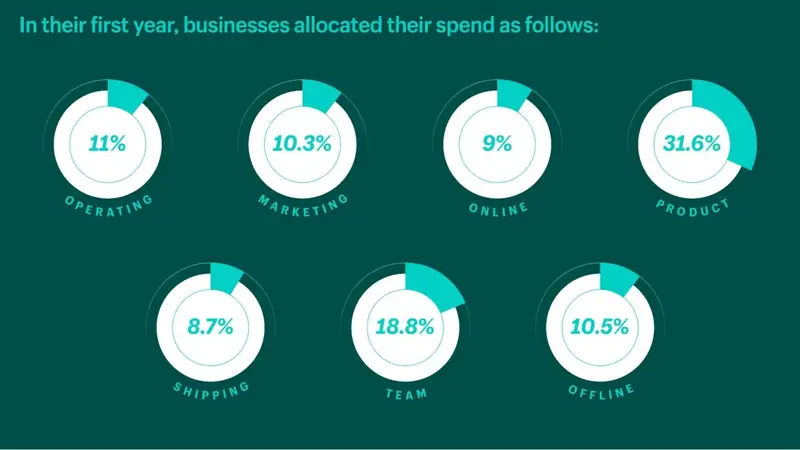
Our data shows that the average small business owner spends $40,000 (approximately 6 million yen) in their first year.
Product-related costs are the biggest expense, but recycling shop owners can keep this significantly below average. If you accept donations, you don't have to pay for any extra inventory.
Other costs to consider, and their proportions from the average annual cost of $40,000 (approximately 6 million yen), are as follows:
- Management: 10% to 15%
- Shipping: 8% to 12%
- Online: 9% to 10%
- Marketing: 7% to 12%
- Team: 14% to 30%
If you lack the funds to start a recycling shop, consider bank loans and local grants as startup funding options. Grant providers may be more willing to fund recycling shops that promote sustainable shopping habits.
Points to note when opening a recycling shop
There are many things to consider when starting a recycling shop. It's not uncommon for entrepreneurs to make the wrong choices, making it difficult to generate profits.
The following are some things to avoid when starting a recycling shop business:
- Choosing the wrong location: A recycling shop owner will face tough competition if they set up shop in an area with a demographic that doesn't favor recycling, or outside of town. Market research and competitive analysis are helpful.
- Lack of inventory management process: Recycle shops typically only have one of each item. Once sold, it's gone, making inventory management difficult. Using a recycle shop inventory management tool to display real-time inventory status is especially important when selling through retail stores, e-commerce sites, and social media stores.
- Ineffective pricing: The reason for opening a second-hand shop is probably to make a profit, but people tend to look for used items when they are on a limited budget. Finding the right balance is difficult and requires trial and error.
Become a recycling shop owner
Recycling is not just a fun weekend activity; it's a lucrative business venture that can help the environment, support local communities, and generate profits.
The key to running a successful second-hand shop business is specializing in a specific type of used goods, setting competitive prices for your inventory, and sourcing products through unique means other than wholesalers. This requires a lot of effort, but it's worth it.
Start selling in person with Shopify POS.
Shopify POS is the easiest way to start selling in person. Grow your brand, process payments, manage inventory and payments, and sell at farmers markets, pop-up events, meetups, craft fairs, and more.
Frequently Asked Questions about Starting a Recycling Business
Is it possible to make a profit by running a recycling shop?
Opening a recycling shop has the potential to generate profit. Especially if you source inventory from donations, you won't incur any purchase costs. However, you will need to set prices for your goods to cover operating costs (marketing, rent, business insurance, etc.).
How do I start a recycling business?
- Market research
- Register your recycling business
- Find the right retail location
- Optimizing the layout of a recycling shop
- Set the price of the inventory.
- Hire retail staff
- Managing the operation of a recycling shop
Is recycling a good way to make money?
Recycling is a great way to make money if you can source in-demand items at a low price. You can then add your own markup and resell the items for a profit.
How can I start a recycling business when I have no money?
- We are requesting your donation.
- Participating in estate cleanouts and garage sales
- Selling my own things
- Apply for local grants
- Obtain a business loan
Share this article
- Share on Facebook
- Share on X
- Share on LinkedIn



