跨境独立站开店
Shopify Headless Commerce: Don't rush into a complete overhaul; first, determine if it's worth doing.
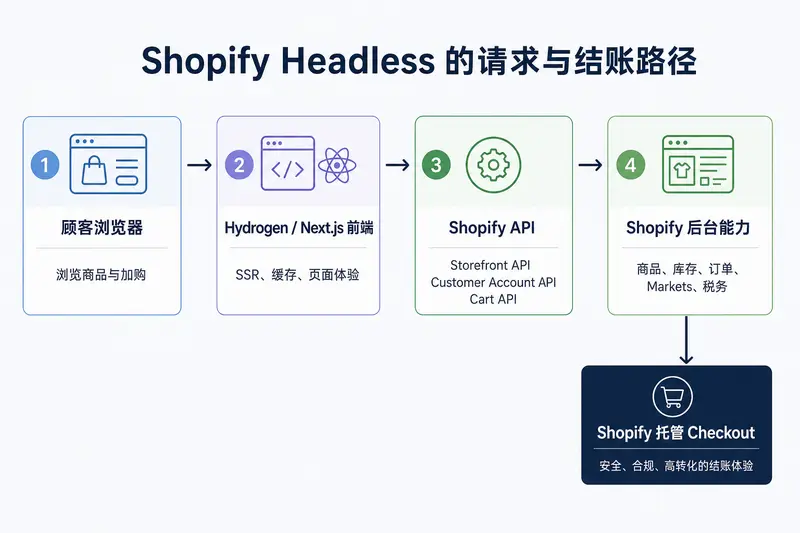
Not every Shopify store should be headless. This guide helps engineering and business teams make actionable decisions, starting with business considerations, Hydrogen/Next.js selection, Storefront API, caching, SEO, application compatibility, and migration risks.
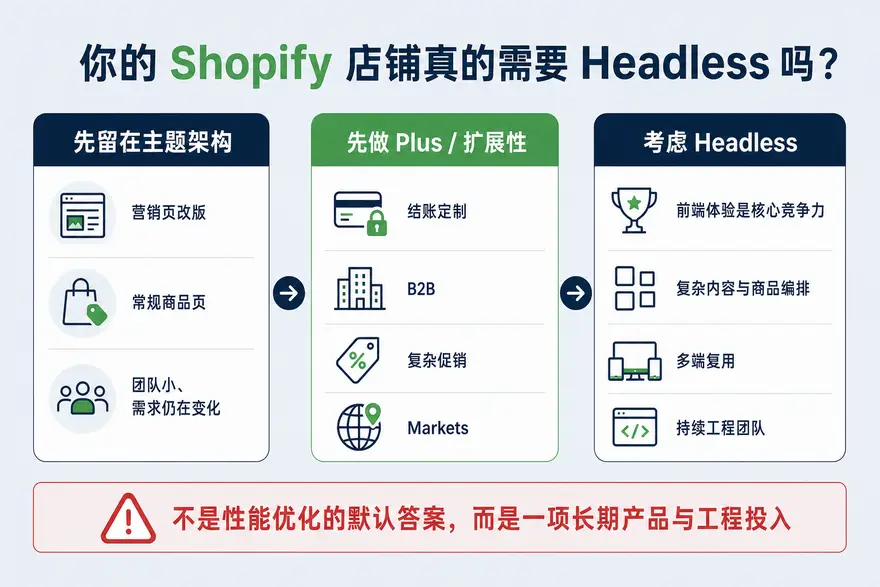
First, clarify what themes, Plus extensions, and Headless each address.
Theme architecture remains the correct starting point for the vast majority of stores. Its advantage isn't "simplicity," but rather that Shopify has already integrated its capabilities for products, markets, discounts, apps, and the editor. Marketing teams can modify modules in the Theme Editor, most apps are ready to use out of the box, and development teams only need to maintain Liquid and a small amount of JavaScript.
II. Under what conditions should a headless approach be considered for project approval?
Don't set a rigid threshold based on monthly sales or page views. A high-traffic themed website might be perfectly adequate; a small brand might also find it worthwhile if its product experience is unique enough. A more reliable judgment is whether the following three things are true simultaneously.
Path A: Hydrogen + Oxygen
Hydrogen is Shopify's opinion-based headless framework, currently based on React Router. It doesn't mean "low-code," but it puts the Storefront API, Customer Account API, shopping cart, caching, and Shopify deployment workflow into a set of conventions that are closer to e-commerce scenarios.
Path B: Next.js + Storefront API
If a brand already has a Next.js platform, design system, CMS integration, and deployment system, continuing to use Next.js is often more pragmatic than "switching frameworks for Shopify." The trade-off is that Shopify's conventions for Hydrogen need to be implemented manually: Graph...