 跨境独立站开店
What is a digital storefront? Types of construction technologies and how to choose the right one.
This article explains the meaning of digital storefronts and the different types of technologies used to build them. By understanding the selection criteria and key considerations, you can choose the platform and construction method best suited to your company.
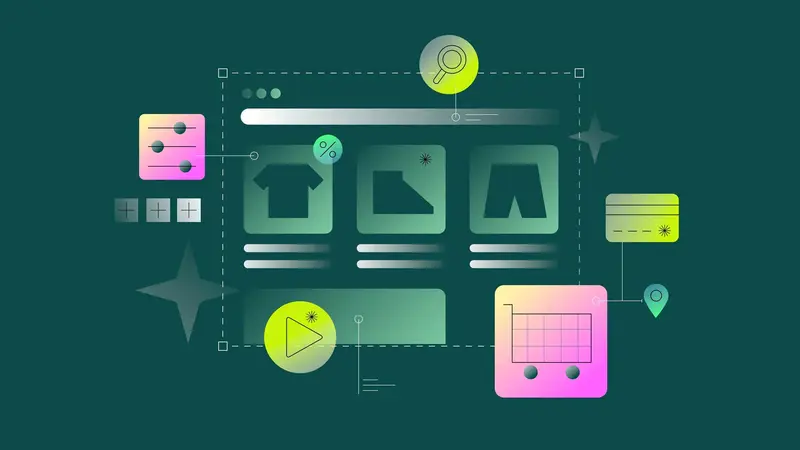





This article explains everything from the overview and importance of digital storefronts to the types of construction technologies, specific examples, how to choose the right one, and points to consider when implementing them.
In recent years, the evolution of marketing trends has significantly changed how e-commerce sites are built, and there is an increasing demand for designs that prioritize customer experience and for e-commerce optimization.
As a result, the design of a digital storefront can make a significant difference in sales and bounce rates. On the other hand, building one without a thorough understanding of the technology and architecture can lead to substantial modification costs later on.
This article provides a clear explanation of the overview and importance of digital storefronts, including the types of construction technologies, specific examples, selection criteria, and points to note during implementation, all essential to prevent such failures.
What is a digital storefront?
A digital storefront is a general term for the front-end areas of an e-commerce site or mobile app that users directly interact with when browsing, comparing, and purchasing products. It is a concept that includes not only interfaces such as product pages, search functions, and shopping cart screens, but also elements related to the purchasing experience, such as navigation and personalization.
This area differs in role from the backend, which handles inventory management and payment processing. Its distinguishing feature lies in designing how information is presented to users and what kind of user journey encourages purchasing behavior. In other words, a digital storefront is a concept that refers to the entire customer touchpoint, including not only the "visual design" but also information architecture and usability.
In recent years, it has become common practice to build the front-end and back-end separately. The two communicate through a mechanism called an API (Application Programming Interface), allowing them to exchange only the data necessary for each screen.
This allows the same product data and inventory information to be used consistently across various platforms, including websites, smartphone apps, and external services. As a result, it enables a flexible system that provides consistent information across all sales channels.
The Importance of Digital Storefronts
- Customer experience is key to competitive advantage.
- Measures to optimize the customer experience
- Optimization of technology, operations, and costs
- Responding to the diversification of customer touchpoints: As purchases are made across multiple channels, including websites, apps, and social media, providing consistent information and experiences at each touchpoint leads to a competitive advantage, thus requiring the optimization of digital storefronts.
- A crucial touchpoint that shapes a brand's first impression: Since many customers browse, compare, and purchase products online, the digital storefront serves as a gateway connecting businesses with customers and is a crucial touchpoint that shapes a brand's first impression.
- Intensified competition: On the internet, it's easy to compare services, so even slight usability issues can lead to customer churn. Therefore, intuitive operation and user-friendly design are essential, and the quality of the customer experience determines the competitiveness of a service.
- Improving conversion rates: It is necessary to optimize information architecture and UI according to user behavior and make the path to purchase smoother. This leads to improvements in bounce rates and increased purchase rates.
- Advanced Personalization and Targeting: By leveraging AI and machine learning, it's possible to display information optimized for each customer based on their browsing behavior and purchasing history. This allows for a more personalized shopping experience, leading to increased engagement and conversion rates.
Optimization of technology, operations, and costs
- Flexibility: In today's rapidly changing market and customer needs, businesses are required to quickly adapt to campaigns, content updates, and new channels. Therefore, a storefront design that can flexibly respond to changes and expansions is essential.
- Streamlining development and operations: Separating the frontend and backend allows for development and improvements to proceed while minimizing the scope of impact, and the clear division of roles leads to increased development speed.
- Improved cost efficiency: Online-centric storefronts tend to have lower fixed costs such as rent and labor compared to physical stores, making it easier to reallocate limited resources to marketing and product development.
Types of digital storefront construction technologies
- Monolithic type (traditional storefront)
- Headless Commerce
- Composable Commerce
The monolithic architecture is a traditional and widely used configuration where the front-end and back-end are integrated. For example, Shopify allows you to build a store by utilizing theme features (such as Liquid), which allow you to adjust the design and layout based on a template.
A major advantage is that it's easy to implement even without special development skills, and can be started quickly and at low cost. On the other hand, it's important to note that the screen structure and functionality are platform-dependent, which can create limitations when optimizing the UI in detail or designing a unique user experience.
Headless commerce is a system where the frontend and backend are built separately, and only the necessary data is exchanged and communicated via APIs. The user interface can be freely created using dedicated development technologies (such as React or Next.js), allowing for flexible design and usability without being bound by existing templates.
Furthermore, it's easy to deploy the same data not only to websites but also to smartphone apps and external services, making it suitable for multi-channel support. On the other hand, it's characterized by its high design and development difficulty, making a robust engineering team and operational design crucial.
Composable commerce is an approach that builds an e-commerce site by combining individual services such as payment, search, and CMS, rather than integrating all the necessary functions into a single system.
Because you can select the optimal tool for each function, you can flexibly adjust the configuration to match your company's business requirements and growth phase. For example, it's possible to design a system that uses a highly functional service only for search. However, since it requires integrating multiple services, the overall design and operation are more complex, requiring a strong technical understanding and organizational structure.
Examples of digital storefronts
- A case study of integrating multiple stores to simultaneously improve operations and user experience.
- An example of redesigning the brand experience from the perspective of presentation through a headless architecture.
- Case study of optimizing checkout and accelerating improvement speed.
This is an example of a company operating multiple online stores that integrated their storefronts using APIs. Previously, each store required separate management and modification, resulting in an inefficient situation where similar tasks were repeated. Therefore, by introducing and standardizing a new CMS, custom product pages, and checkout functionality, the company reduced the need for individual operational adjustments.
This allows for batch updates of product information and inventory, significantly reducing operational effort. Furthermore, the revised configuration ensures that display speed is maintained even during periods of high traffic, resulting in a more comfortable shopping experience for users.
This is an example of a company that develops high-end brands revamping its digital storefront and migrating to a headless architecture to better convey the brand's identity. Previously, the storefront was limited to displaying products in a list format, primarily providing static information. In contrast, the design was changed to one that utilizes videos and visuals, allowing customers to browse products while experiencing the brand's world and story.
For example, we've implemented a system that allows users to scroll through images, similar to a feature page in a fashion magazine, and immediately add any items that catch their eye to their cart.
This creates a seamless experience where users can enjoy content and proceed directly to purchase without having to navigate to other pages.
This is an example of a company operating multiple online stores that modularized its checkout function and integrated it into a common system. Previously, code modifications, testing, and deployment work were required for each store, resulting in an inefficient situation where the same changes were repeated. Furthermore, there was a risk of discrepancies or omissions in the modifications across stores, resulting in a heavy operational burden.
Therefore, by standardizing the checkout function, we were able to reflect changes across all stores at once. This allows us to quickly add new payment methods and improve the UI, achieving both a stable purchasing experience and continuous improvement while keeping the operational burden down.
Choosing the Right Technology for Your Digital Storefront: 4 Key Points
- Flexibility and balance of development resources
- Business scale
- UX and Brand Requirements
- Future scalability
1. Balancing flexibility and development resources
While a high degree of flexibility in a digital storefront increases its expressiveness and scalability, it also increases the burden of development and operation. For example, a headless configuration is suitable if you want to finely optimize the UI and user flow, but operation becomes complex without a system for continuous improvement. Template-based designs are simple to implement and operate, but they have limitations in terms of customization.
Therefore, it's important to choose based not just on the ideal user experience, but also on whether it can be continuously improved.
2. Business Scale
Technology selection is important not only based on company size but also on the business phase. In the startup phase or small-scale operation, the priority is to quickly launch the service and run testing iteratively, so a simple configuration like a monolithic architecture is suitable.
On the other hand, as a business expands and requires multiple brands and external collaborations, traditional approaches become insufficient. In such cases, migrating to an API-based or headless configuration allows for flexible adaptation to growth.
3. UX and Brand Requirements
The digital storefront is a crucial point of contact where customers interact with the brand, and the type of purchasing experience you want to provide greatly influences your technology selection.
If the goal is simply to allow customers to easily purchase products, standard features are sufficient. However, if you prioritize using content to appeal to customers or expressing your unique ideas, a more flexible configuration is required.
UI design is one of the elements that make up UX design, and especially in D2C and high-priced products, "how it is presented and how it leads to purchase" directly impacts results, so it is important to make decisions based on the user flow design and the overall user experience.
4. Future scalability
When selecting technology, it is important to consider not only current requirements but also future developments. If you are looking to expand overseas, you will need a configuration that easily supports multiple languages and currencies, and if you are planning sales through multiple channels, you will need a design that allows data to be shared and utilized.
You don't need to build everything from scratch, but by planning for future expansions, you can avoid major overhauls.
Points to consider when implementing a digital storefront
- Design with security measures in mind.
- It is necessary to devise ways to stand out in a competitive environment.
- Technical defects directly impact sales.
- Optimizing everything from logistics to inventory management.
- We need to continuously adapt to changing customer needs.
Digital storefronts handle customer and payment information, making security measures essential. Especially in configurations that combine API integration and external tools, there is a risk of access from unforeseen channels and data breaches.
Therefore, in addition to implementing encryption and a secure payment infrastructure, it is important to establish a system that allows for early detection and response to risks by conducting access control, log monitoring, and regular vulnerability assessments.
The online market is highly competitive, and simply launching a store won't increase traffic. It's crucial to integrate customer acquisition strategies—such as visibility in search results, social media sharing, and building brand awareness—with the design of your digital storefront.
Furthermore, since competitors are also continuously improving, simply optimizing once is not enough. Without an operational system that continuously iterates on improvements while monitoring the data, competitiveness may gradually decline.
Therefore, it is necessary to link customer acquisition strategies with the design of the digital storefront.
Slow website speed, shopping cart errors, and payment processing problems can lead to customers abandoning the site and lost opportunities. The load on the site is especially high during sales events and periods of high traffic, so even minor issues can have a significant impact.
Therefore, it is important to have a system in place that allows for quick responses when problems occur, including not only pre-release testing but also monitoring, alert settings, and load balancing in the production environment.
Optimizing your digital storefront alone is not enough to guarantee customer satisfaction. Stockouts, delivery delays, and slow return processing can damage brand trust. Especially when selling through multiple channels, discrepancies in inventory updates and data can lead to missales.
Therefore, it is necessary to review the logistics process from order placement to delivery, utilizing inventory management systems and other tools, and to improve both the system and operational aspects.
Customer purchasing behavior and expectations are constantly changing, and the ability to adapt to these changes is directly linked to competitiveness. For example, smartphone-centric purchasing, increased traffic from social media, and expectations for personalized recommendations are all growing year after year. Failure to adapt to these changes can lead to customer churn, even if the store itself is user-friendly.
Given this background, it is crucial to regularly analyze customer data and continuously incorporate the findings into improvements.
A digital storefront is not merely the appearance and functionality of an e-commerce site; it's a crucial element that influences the customer experience itself. While technological advancements enable flexible construction and sophisticated presentation, it also requires appropriate selection and operation based on your company's business scale, structure, and future developments.
Furthermore, it is essential to continuously adapt to changes in security, operational systems, and customer needs even after implementation. By designing and operating with continuous improvement in mind, rather than just short-term optimization, it becomes easier to maintain a competitive advantage in a competitive environment.
Identifying the optimal configuration for your company and strategically utilizing your storefront will be key to the future growth of your e-commerce business.
Frequently Asked Questions about Digital Storefronts
What is a digital storefront?
A digital storefront is the front-end area of an e-commerce site or mobile app that users directly interact with when browsing, comparing, and purchasing products. It is a concept that includes not only interfaces such as product pages, search functions, and shopping cart screens, but also elements related to the purchasing experience, such as navigation and personalization.
What types of technologies are used to build digital storefronts?
What are the main technologies used in digital storefronts?
In addition to front-end technologies such as HTML, CSS, and JavaScript, frameworks like React and Next.js are used. APIs are used for integration with the backend, and it is common to build a system by combining it with external services such as CMS, payment systems, and search functions.
What are the key points to consider when choosing a digital storefront technology?
Share this article
- Share on Facebook
- Share on X
- Share on LinkedIn



