跨境独立站开店
Wholesale vs. Dropshipping: Which should you choose?
This article summarizes the differences between wholesale and dropshipping. Understand the advantages and disadvantages of each to choose the business model that best suits your company.



This article summarizes the differences between wholesale and dropshipping. Learn about the advantages and disadvantages of each to choose the best model for your online shop.
If your company is not a manufacturer or production company, you will need to decide how to procure products when launching a new e-commerce business. The most common methods are wholesale, where you purchase a certain number of products and hold inventory, and dropshipping, where you sell without holding inventory.
The most suitable funding method varies depending on the scale of investment in your e-commerce business and your financial situation. This article summarizes the characteristics, advantages, and disadvantages of wholesale and dropshipping, and explains which one you should choose for your e-commerce strategy.
What is wholesale?
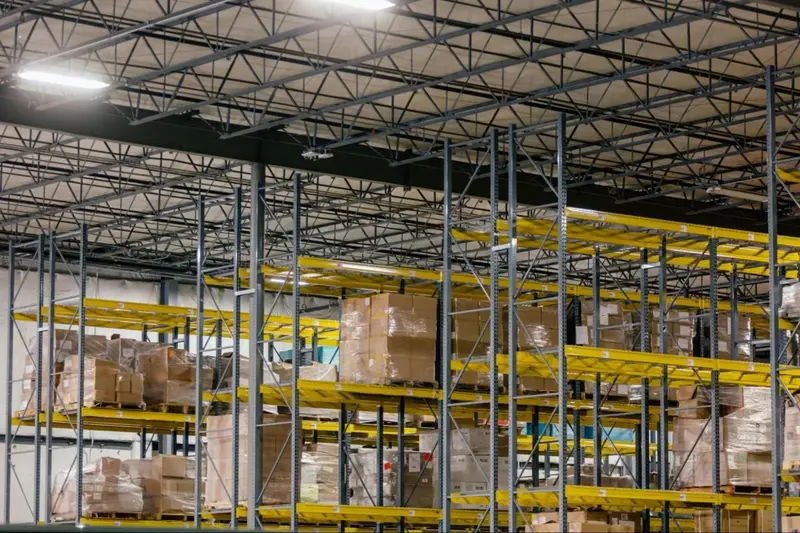
Wholesale is a method of purchasing goods in bulk from manufacturers or wholesalers and selling them through one's own online store or physical store. The seller procures the goods in advance and handles everything from inventory management to shipping arrangements.
Generally, the cost per item decreases as the order quantity and total order amount increase, so a key feature of purchasing items in bulk is that you can reduce the cost per item.
On the other hand, it's important to note that initial costs associated with purchasing inventory and the burden of inventory management will be incurred.
Wholesale mechanism
The basic flow of wholesale on an e-commerce site is as follows:
- We purchase goods in bulk at wholesale prices from manufacturers and wholesalers.
- Store the products as inventory.
- Sold through our own online store.
- Once an order is placed, the seller ships the product to the customer.
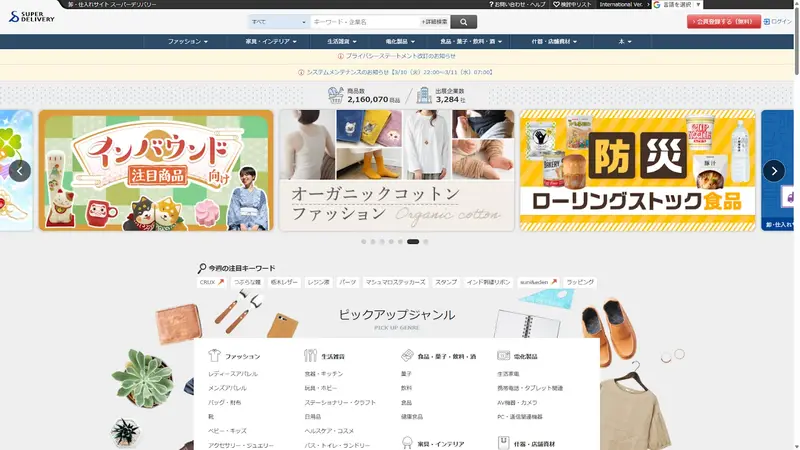
For example, SUPER DELIVERY is a membership-based B2B trading site that connects manufacturers and wholesalers with retailers, allowing you to source a wide range of products online, including apparel, general merchandise, and food.
What is dropshipping?
Dropshipping is an e-commerce business model that allows retailers to sell products without holding inventory. When a customer places an order, the supplier, such as a manufacturer or wholesaler, ships the product directly to the customer.
Therefore, a key feature is that it's easy to start online sales with relatively low initial investment, such as the cost of building an e-commerce site. On the other hand, product quality control and delivery will depend on suppliers.
How dropshipping works
The basic process is as follows:
- We list our suppliers' products on our own online store.
- An order comes in from a customer.
- The seller sends order information to the supplier.
- The supplier ships the products directly to the customer.
For example, on online retailer sourcing sites like TopSeller, you can choose from hundreds of thousands of products, including apparel, general merchandise, and home appliances, to sell.
The difference between wholesale and dropshipping
- initial investment
- Profit margin and loss risk
- Inventory management and fulfillment
- Product lineup flexibility
- Branding
- Relationships with suppliers
- Differentiation from competitors
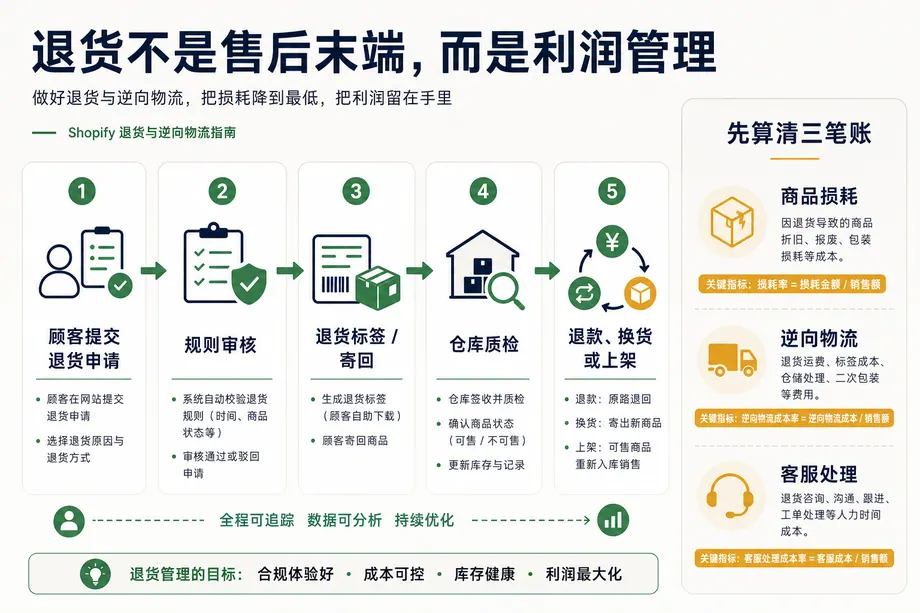
- Returns and refunds
Wholesale requires initial investments such as procurement costs and storage space. On the other hand, dropshipping does not require purchasing goods in advance, thus reducing initial investment costs.
In wholesale, purchasing in bulk makes it easier to lower the cost per item and increase profit margins, but on the other hand, there is a risk of unsold inventory.
On the other hand, with dropshipping, there is no risk of unsold inventory because products are sourced individually, but the purchase price is higher, resulting in a lower profit margin per order. Therefore, it might be a good idea to consider digital dropshipping, such as for software, which has a relatively high profit margin.
In wholesale, the seller handles fulfillment, including product storage, inventory management, packaging, and shipping, allowing them to control shipping methods and timing. In contrast, with dropshipping, the supplier is responsible for inventory management and shipping, simplifying operations.
With dropshipping, it's easy to add and remove products from multiple suppliers, allowing for flexible adjustments to the product lineup to match trends and customer needs. In contrast, with wholesale, purchasing comes first, making it difficult to frequently change the product lineup.
In wholesale, when shipping products from your own company, you can include leaflets that highlight the quality and commitment to the products you handle, allowing you to directly communicate the brand value of your shop.
On the other hand, with dropshipping, packaging and shipping are handled by the supplier, limiting opportunities for brand promotion. Therefore, it is important to strengthen the brand with the cooperation of the supplier and to improve the website's user experience design.
In wholesale, it's common to deal directly with manufacturers and brands, allowing for the development of relationships that include price negotiations and the supply of white-label products through ongoing transactions. On the other hand, in dropshipping, transactions with suppliers are often conducted through online sourcing platforms, resulting in more limited relationships with suppliers.
In dropshipping, multiple sellers often handle products from the same supplier, making it difficult to differentiate shops due to similar pricing and product offerings. In contrast, wholesale sometimes allows sellers to handle unique products by entering into exclusive distribution agreements with suppliers.
In dropshipping, returns and refunds are often limited to damaged or defective products, and the response tends to be heavily dependent on the supplier's policy. On the other hand, with wholesale, you can flexibly handle refunds, exchanges, and store credits at your own discretion.
Advantages and disadvantages of wholesale and dropshipping
Advantages of wholesale
- Easier to secure profits: By purchasing goods in bulk, you can lower the unit cost of purchase and increase your profit margin.
- Building relationships with suppliers makes it easier to obtain a stable supply of goods and information on new products.
- Faster delivery: Because we maintain our own inventory, we can ship orders as soon as they are placed.
- Inventory and delivery management capabilities: You can centrally manage inventory and delivery methods in-house, allowing you to understand the overall logistics situation.
- It allows you to showcase your brand's unique characteristics: You can brand your products through unique packaging and included items such as thank-you cards.
Disadvantages of wholesale
- Cash flow becomes tight: A certain amount of capital is required because goods are purchased in bulk in advance.
- There is a burden of inventory management: Inventory management tasks such as ordering inventory and taking physical stock become necessary.
- Storage space and logistics costs are required: Warehouses and personnel are needed to store the goods.
- There is a risk of unsold inventory: In addition to the risk of having purchased goods remain unsold as inventory, there is also the possibility of having to discard goods due to expiration dates.
- There is a minimum order quantity: Some wholesalers may have a high minimum order quantity (MOQ).
Benefits of dropshipping
- Lower initial costs: Since you don't need to stock products in advance, you can reduce the initial costs when starting sales.
- No inventory storage required: Since you don't hold inventory, you don't incur storage costs such as warehouse fees.
- Easier to expand your business: You can increase the number of products in high-demand categories without significantly increasing your workload.
- Wide range of products available: You can sell a wide variety of products from multiple wholesalers, from baby products to DIY products such as automotive parts.
- It's easy to test product needs: This means there's less risk in trying to sell new or niche products.
Disadvantages of dropshipping
- Profit margins tend to be low: Because discounts for bulk purchases are not applied, the profit margin per item tends to be small.
- Dependence on suppliers: Since product inspection, packaging, and shipping are entrusted to suppliers, it becomes difficult to provide a consistent purchasing experience in-house.
- Difficulty in differentiation: Because multiple sellers handle products from the same supplier, it becomes difficult to differentiate your site from competitors.
Decide whether to wholesale or dropshipping.
If you're unsure whether to start with wholesale or dropshipping, it's best to consider your business situation and priorities. Use the following questions to help you determine which model is right for your business.
What is your initial investment budget?
If you want to minimize initial investment, dropshipping is a good option. Since you don't need to stock products in advance, you can start selling online with relatively little capital.
How soon do you want to start selling?
If you want to start selling quickly, dropshipping is a good option because you can use tools to collaborate with suppliers and begin selling in a relatively short period of time.
Do you have relationships with suppliers?
If you already have business relationships with manufacturers or wholesalers, wholesale may offer a smoother business environment. Continuous transactions can also provide advantages in areas such as price negotiation and product supply.
To what extent do you want control over the products and shipping process?
If you want to manage product quality, packaging, and shipping methods yourself, wholesale is suitable. If you want to leave logistics and inventory management to your suppliers, dropshipping will be easier to manage.
Do you prioritize customer loyalty and repeat customers?
In wholesale, including samples of related products or higher-grade products makes it easier to encourage cross-selling and upselling, which tends to increase repeat purchases and customer loyalty.
What kind of products would you like to handle?
Wholesale is suitable for small, low-priced items such as candles and stationery, as inventory can be stored in relatively little space. For items like clothing and shoes, where size discrepancies are common, and perishable foods, wholesale offers the advantage of being able to manage inventory responsibly in-house.
On the other hand, for high-priced items such as furniture and electronic devices, dropshipping may be suitable due to the high cost of procurement. Furthermore, for digital content such as books and music, dropshipping is ideal because there is no need to hold inventory.
Are you planning to sell the products through channels other than online?
Dropshipping is fundamentally a model based on online sales. If you want to sell products through channels other than online, such as physical stores or events, wholesale, where you hold inventory, is more suitable.
Many businesses initially adopt a hybrid model, using dropshipping to gauge market reaction and then sourcing best-selling products wholesale. By utilizing the Shopify e-commerce platform, you can efficiently develop online sales while incorporating both dropshipping and wholesale strategies. Open a Shopify store and grow your e-commerce business in a way that suits your business model.
While both wholesale and dropshipping are widely used sales models in e-commerce businesses, there are significant differences in initial investment, profit margins, inventory management, and operational methods.
If you want to keep initial costs down and have flexibility in testing products, dropshipping is suitable. If you want to increase profit margins while managing inventory and brand experience in-house, wholesale is a strong option.
By choosing the optimal model based on your company's budget, business stage, and values, and by combining both as needed, you can drive the growth of your e-commerce business.
Frequently Asked Questions about Wholesale and Dropshipping
What is the difference between wholesale and dropshipping?
Wholesale is a method where retailers purchase goods, hold inventory, and sell them, whereas dropshipping is a sales method where retailers do not hold inventory and the goods are shipped directly from the supplier to the customer after an order is placed.
Which is better, wholesale or dropshipping?
Which is more suitable depends on the stage of your business, your budget, and the operational methods you prioritize. If you want to keep initial costs down and start selling quickly, dropshipping is a good option. On the other hand, if you want to manage inventory and shipping yourself and prioritize brand experience and profit margins, wholesale is more suitable.
Are there any more profitable methods than dropshipping?
Generally, wholesale tends to offer higher profit margins than dropshipping. In wholesale, purchasing goods in bulk allows you to lower the unit price, making it easier to secure profit per transaction.
Do wholesalers offer dropshipping?
While some wholesalers offer dropshipping, it's not a standard service in typical wholesale transactions, as they often assume large orders. Some online sourcing platforms and marketplaces may include suppliers who offer dropshipping.
Share this article
- Share on Facebook
- Share on X
- Share on LinkedIn