跨境独立站开店
Omnichannel Inventory Management: Challenges and Solutions
This article discusses the challenges omnichannel companies face in inventory management, their causes, and solutions. Understanding logistics systems and their weaknesses will help you achieve efficient inventory management.
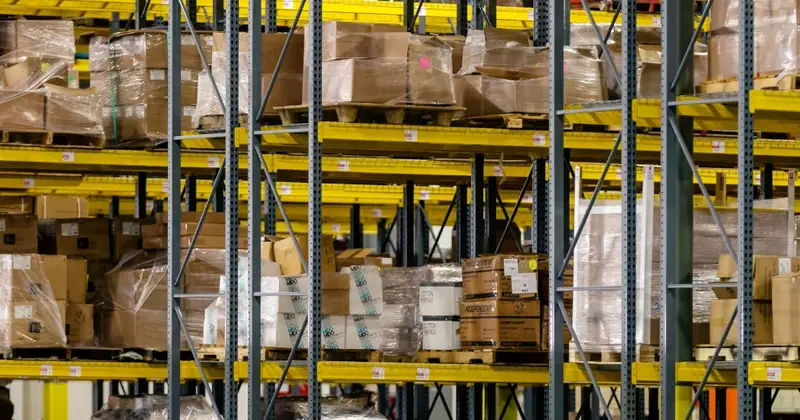




This article provides a detailed explanation of the challenges and main solutions for omnichannel inventory management.
As more companies sell across multiple channels, including e-commerce sites, physical stores, e-commerce marketplaces, and apps, the increasing complexity of inventory management and logistics operations is becoming a challenge. In particular, dispersed inventory information, stockouts, excess inventory, and shipping errors can easily lead to lost sales opportunities and decreased customer satisfaction, making it crucial to establish an appropriate inventory management system.
On the other hand, there are many cases where companies struggle with questions such as, "How do I manage inventory across multiple channels?" or "How do I optimize my inventory management?"
This article provides a detailed explanation of omnichannel inventory management, including its overview, common challenges, main solutions, and key points to consider when selecting a system.
What is omnichannel inventory management?
Omnichannel inventory management refers to a system that centrally manages and shares inventory information from multiple sales channels, such as e-commerce sites, physical stores, marketplaces, apps, and social media. By linking inventory data from each channel in real time, it becomes easier to understand "where, what, and how much is being sold," making it easier to build a sales system that spans both online and offline channels.
In recent years, cross-channel purchasing experiences have become widespread, such as "BOPIS (Buy Online Pick-up In Store)," where customers order products online and pick them up at physical stores. To realize these sales models, it is important to integrate and manage inventory information for both e-commerce and physical stores, rather than managing them separately.
Furthermore, omnichannel inventory management is not simply a system for tracking inventory levels. By visualizing inventory status and coordinating across sales channels, it leads to maximizing sales opportunities, improving delivery efficiency, and enhancing the customer experience. In particular, for companies operating multiple stores or warehouses, centralizing inventory data makes it easier to manage sales and deliveries more flexibly.
Common challenges and causes of omnichannel inventory management
- Inventory information is scattered across different channels.
- Stock shortages or excess inventory occur.
- Inventory discrepancies and shipping errors occur.
- The return and exchange process is becoming more complicated.
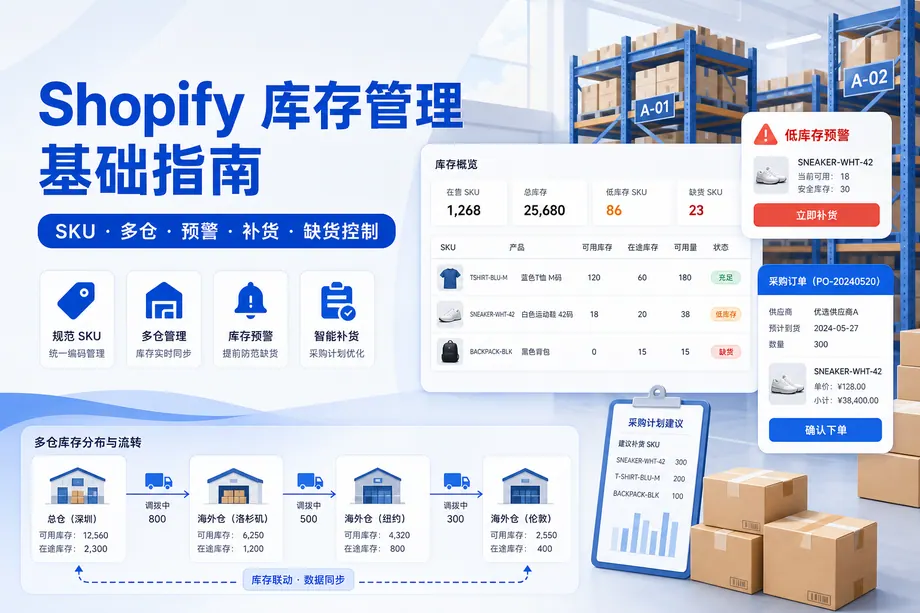
- Managing inventory across multiple locations becomes complicated.
Managing inventory across multiple warehouses and stores complicates operational flows such as receiving, shipping, and inventory counting. Furthermore, if inventory information isn't shared in real time, there's a risk of selling items that aren't actually in stock. Additionally, discrepancies in inventory data updates between stores and warehouses can lead to mis-shipments and cancellations, as well as discrepancies between actual inventory and available stock.
In an omnichannel strategy, optimal inventory allocation becomes difficult because best-selling products and demand trends differ across sales channels. Demand forecasts are particularly prone to inaccuracies when demand fluctuates significantly due to sales, campaigns, or seasonal changes. Furthermore, insufficient integration and analysis of sales data across channels can lead to overstocking or, conversely, inventory shortages.
When managing inventory across multiple warehouses or stores, operational flows such as receiving, shipping, and inventory counting become complex. In particular, if inspection and inventory updates are performed manually, input errors and processing omissions are likely to occur, leading to discrepancies between actual inventory and system inventory levels. Furthermore, if inventory information is not shared in real time, products that are no longer in stock may be sold, resulting in incorrect shipments and cancellations.
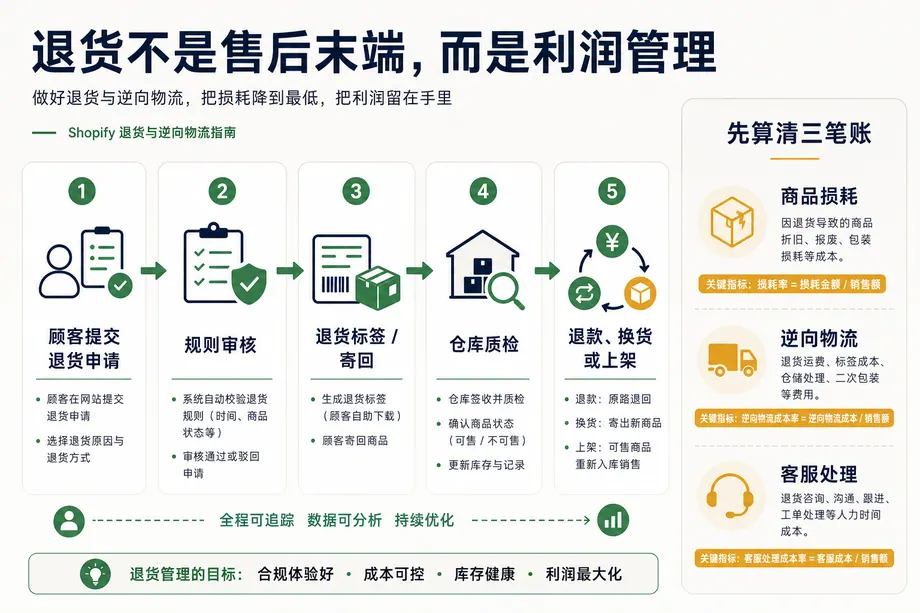
In an omnichannel environment, exchanges and returns occur across channels, such as returning items purchased online to a physical store. This can complicate management flows, including inventory updates after returns, refund processing, and determining whether items can be resold. Furthermore, if return information is not properly shared across channels and locations, inventory data updates may be missed or processing errors may occur, leading to inventory discrepancies.
In omnichannel strategies, inventory across multiple warehouses and stores is utilized, which can complicate the design of inventory placement and shipping rules. For example, decisions such as "which location should the shipment come from?" and "which store should the inventory be replenished?" become necessary, increasing the operational burden. Since inventory must be optimally placed while considering delivery costs and lead times, the management burden increases as the number of locations increases.
The Importance of Inventory Management Systems in Omnichannel Operations
In omnichannel strategies, where multiple sales channels such as e-commerce sites, physical stores, e-commerce marketplaces, and proprietary apps are operated across these channels, a system that can integrate and manage inventory, orders, and shipping information is crucial. In particular, as the number of products, sales channels, and logistics locations increases, traditional, person-dependent operations become increasingly burdensome.
In this environment, it is crucial to establish an environment that allows for centralized management of data from multiple channels and locations by integrating inventory management systems with order management systems (OMS) and warehouse management systems (WMS). Utilizing such systems makes it easier to visualize inventory status, streamline order and shipping processes, and manage complex omnichannel operations.
Furthermore, by building a network that allows for cross-store inventory management, including store inventory, we can smoothly handle in-store pickups and flexible shipping from multiple locations.
Solutions to the main challenges in omnichannel inventory management
- Centralized management of inventory information and real-time synchronization.
- Optimize inventory using demand forecasting.
- Standardize shipping and return flows.
- Optimizing inventory allocation across multiple locations
If you operate multiple channels such as e-commerce sites, physical stores, and e-commerce marketplaces, you need to establish an environment where inventory information can be managed comprehensively by linking inventory management systems, OMS (Order Management Systems), and WMS (Warehouse Management Systems). By synchronizing inventory data in real time between e-commerce, stores, and warehouses, it becomes easier to accurately reflect the number of items available for sale, which helps prevent missed sales stoppages and inventory discrepancies.
Furthermore, by building a network that allows for cross-sectional management, including store inventory, it becomes easier to support "BOPIS (Buy Online Pick-up In Store)" and deliveries utilizing store inventory. In addition, by enabling automatic determination of "which warehouse or store to ship from," it becomes possible to optimize delivery lead times and delivery costs.
In addition, real-time visualization of inventory status allows you to identify stockout risks and excess inventory. As a result, you can speed up inventory movement and replenishment decisions, leading to maximized sales opportunities and improved inventory turnover.
To optimize inventory, it's necessary to forecast demand based not only on past sales performance and inventory turnover, but also on sales, campaigns, seasonal fluctuations, and advertising strategies. For example, analyzing "which products sell well in which regions and at what times of year" makes it easier to secure appropriate inventory before demand increases.
Furthermore, demand forecasting requires continuous analysis of daily, weekly, and monthly sales data, as well as sales trends by channel. For example, understanding trends such as "a particular product sells well on weekends in physical stores" or "orders tend to concentrate during sales periods online" makes it easier to allocate inventory appropriately for each channel. In addition, regularly reviewing safety stock levels and reorder points based on sales speed and stockout frequency helps prevent stockouts while controlling excess inventory.
To streamline shipping and return processing, it's necessary to standardize operational rules from return acceptance to inventory updates and refund processing. For example, clarifying aspects such as "checking the condition of returned items," "criteria for determining whether they can be resold," and "timing of inventory updates" will help prevent inconsistencies in procedures and processing errors across different locations.
Furthermore, by centrally managing return and exchange information within the system and creating an environment where it can be shared between stores, warehouses, and e-commerce sites, inventory discrepancies and processing delays become less likely. In particular, when handling store returns of e-commerce purchased items, it is necessary to standardize the flow, including "when to return items to inventory" and "to which location to move them."
Furthermore, standardizing rules such as "which location to ship from" and "which inventory items to prioritize" can help reduce delivery delays and shipping errors. For example, establishing a system that automatically issues shipping instructions from the nearest warehouse or store can also lead to improved delivery efficiency.
When operating multiple warehouses or stores, it's essential to consider regional demand and delivery lead times when allocating inventory. For example, concentrating inventory near areas with high order volumes can lead to faster delivery and reduced delivery costs. Additionally, analyzing best-selling products and seasonal demand in each region and adjusting the product mix at each location helps prevent stockouts and excess inventory.
Furthermore, even if inventory shortages occur at some locations, having a system in place to flexibly allocate inventory from other locations can minimize lost sales opportunities. For example, by utilizing an OMS (Order Management System) to automatically determine "which store or warehouse is best to ship from," it is possible to reduce inventory imbalances while also improving delivery efficiency.
In addition, utilizing store inventory as a shipping hub makes it easier to shift stagnant inventory to online orders, leading to improved inventory turnover and reduced risk of price reductions. Especially during peak seasons and sales, it is essential to have a system in place that allows for flexible use of not only warehouse inventory but also store inventory.
6 Key Points for Selecting a System for Omnichannel Inventory Management
- Can inventory across multiple channels and locations be centrally managed? Dispersed inventory information increases the likelihood of inventory discrepancies and missed sales stoppages. It's also important to check if the system is compatible with omnichannel strategies such as BOPIS (Buy It Now In Stock) and in-store shipping.
- Can inventory information be synchronized in real time? Check if information such as orders, returns, and in-store sales can be reflected immediately. A time lag in inventory updates can lead to stockouts or overselling.
- Ease of integration with existing systems such as OMS, WMS, and POS: If integration with existing systems is not smooth, duplicate data entry and manual work are likely to increase. The flexibility of API integration and data integration is also an important point to check.
- Can shipping locations and inventory allocation be automatically optimized? Check if the system can automatically issue shipping instructions from the most suitable warehouse or store based on the delivery destination and inventory status. This can lead to shorter delivery lead times and reduced logistics costs.
- Does it have the scalability to handle an increase in the number of SKUs and logistics locations? It is important that the system can be operated stably even as the number of products and logistics locations increase with business expansion. You should also check whether it can accommodate future channel additions and overseas expansion as needed.
- Is the system easy to use and does it have a support system in place? Complex systems are prone to input errors and increased operational burden. It's important to check the post-implementation support system and the scope of troubleshooting.
In omnichannel strategies, managing sales and logistics across multiple channels such as e-commerce sites, physical stores, and online marketplaces can easily complicate inventory management. In particular, scattered inventory information, stockouts, excess inventory, incorrect shipments, and complicated return processing are common challenges for many companies.
To address these challenges, it is crucial to establish a system that allows for centralized, real-time management of inventory information and to optimize demand forecasting, inventory allocation, shipping, and return flows by integrating OMS (Order Management System) and WMS (Warehouse Management System). As sales channels and logistics bases continue to increase, it will be necessary to select and utilize an inventory management system suitable for omnichannel operations, taking into account the scale of your own operations and future scalability.
Frequently Asked Questions about Omnichannel Inventory Management
What is omnichannel inventory management?
Omnichannel inventory management refers to a system that centrally manages and shares inventory information across multiple sales channels, such as e-commerce sites, physical stores, marketplaces, apps, and social media.
What are some common challenges in omnichannel inventory management?
- Stock shortages and excess inventory are likely to occur.
What are the main solutions to the challenges in omnichannel inventory management?
What is the difference between omnichannel and multichannel?
The difference between omnichannel and multichannel lies in whether or not the channels are interconnected. Omnichannel is a model that links and integrates inventory and customer information to provide a cross-channel purchasing experience. On the other hand, multichannel refers to a model where multiple channels, such as e-commerce sites and physical stores, are operated individually.
Share this article
- Share on Facebook
- Share on X
- Share on LinkedIn