跨境独立站开店
What is a flat shipping rate? How to design shipping rates to increase sales.
What are the advantages of a flat-rate shipping policy? Let's learn about how to implement flat-rate shipping, how to understand costs, and how to improve customer satisfaction.

What are the advantages of a flat-rate shipping policy? Let's learn about how to implement flat-rate shipping, how to understand costs, and how to improve customer satisfaction.
Whether you're just starting out or have years of experience, shipping management can be a headache. There's no single right answer to shipping strategies, but a flat rate shipping fee can be highly effective in providing a better checkout experience and fostering repeat business.
Modern customers demand fast and affordable shipping options, and it's crucial to meet those expectations while providing flexibility. That's where a flat shipping rate comes in. By offering predictable and transparent shipping costs, customers can feel confident clicking the "buy" button.
Flat-rate shipping helps increase sales while maintaining a balance of costs, by managing initial expected prices, communicating delivery speeds, and offering affordable rates based on the total cart amount. This article will show you how to offer flat-rate shipping on your e-commerce site.
What does "flat-rate shipping fee" mean?
A flat shipping rate refers to a pre-set shipping fee based on the customer's order. You can offer a general flat rate, or you can set a conditional flat rate based on factors such as the weight of the goods or the order amount.
For example, you could charge 1,100 yen for domestic orders, 1,500 yen for international orders, and a flat rate of 500 yen for orders over 10,000 yen.
Advantages of flat-rate shipping
Managing customer expectations
One reason why a flat shipping rate is attractive to customers is that it helps manage expectations and provides transparency. By offering a flat rate, customers can know the exact cost of shipping before proceeding to checkout.
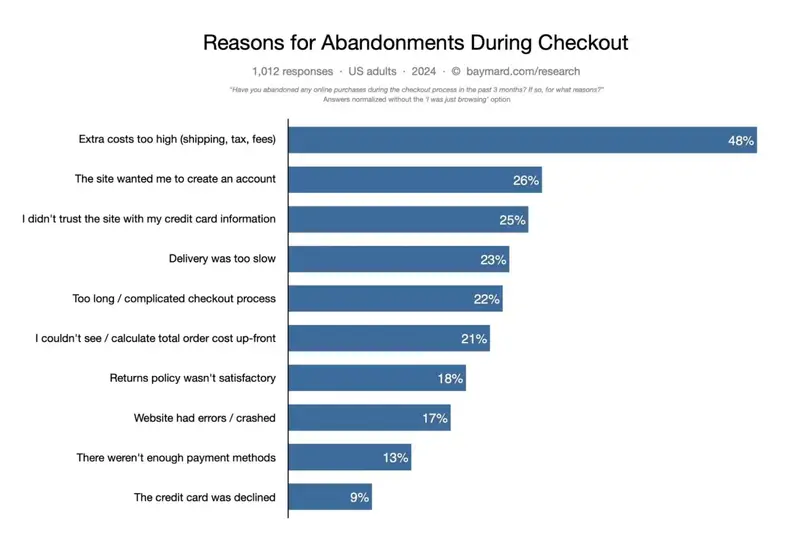
Recent research has revealed that unexpected additional costs at checkout are a major reason for shopping cart abandonment.
However, by communicating a flat shipping cost in advance through notification bars or shipping policy pages, you can minimize dissatisfaction and build customer trust. This transparency can significantly reduce the likelihood of cart abandonment due to unexpected shipping fees.
Increase the average order value
Price-based rates incentivize customers to add items to their cart to take advantage of cheaper shipping options. While this means your business will bear some of the shipping costs, it's a wise choice if the cart total increases.
Offering free shipping on orders above a certain total amount incentivizes customers to add more items to their cart, increasing your average order value (AOV). This benefits both your business and your customers; customers feel they're getting a good deal, and you see increased sales.
Reduce packaging costs
Many shipping companies offer fixed-price boxes of specific sizes, with a set fee applied to the delivery of items contained within these boxes. This is often cheaper than purchasing boxes yourself and obtaining a custom shipping quote.
This is particularly beneficial for businesses that ship large quantities of goods or those that sell items that fit into standard flat-rate box sizes.
Furthermore, the packaging provided by the shipping company ensures that the goods are properly protected during transit, minimizing the risk of damage and reducing the likelihood of costly returns or exchanges. This is a simple way to reduce costs and satisfy customers.
Flat rate shipping fee
Estimating average shipping costs is the best way to set prices. You will need to know the maximum weight and dimensions of your products and packages.
Use an online shipping calculator to get an estimate and calculate the average cost. Ideally, flat shipping rates should be rounded to make them easier for customers to understand and remember. For example, if the average flat shipping rate for domestic delivery is 572 yen, round it up to 600 yen.
Refer to the fixed-price box offered by the delivery company.
Many shipping companies have set fees for shipping boxes of specific sizes.
Choosing this option means you'll have to forgo the use of branded or custom-sized boxes, but shipping costs will be more economical. These cost savings can then be passed on to your customers.
The minimum flat-rate box charges for US shipping carriers are as follows:
- USPS Priority Mail flat rate: 1,100 yen
- UPS flat rate: 1,200 yen
- FedEx flat rate: 1,500 yen
Envelopes with a flat shipping rate are usually cheaper. While they offer less protection than boxes, they are a better option when shipping low-value or small items in envelopes. This allows you to reduce shipping costs and offer more competitive rates to your customers.
Use weight and price conditions
Weight-based pricing allows you to charge a specific amount based on the total weight of all items in a customer's cart. For example, if you want to set different rates for orders under 3kg and orders over 3kg, you could set a flat rate of 700 yen for orders under 3kg and 1,500 yen for orders over 3kg.
For example, a customer with a cart weighing a total of 7kg will only see a 1,500 yen shipping option at checkout. This option is helpful for shipping heavy items and helps avoid the high costs associated with large packages like furniture.
Using price-based rates allows you to charge a specific amount based on the total amount in a customer's cart. For example, if you want to set different rates for orders under 5,000 yen and orders over 5,000 yen, you can set a flat rate of 400 yen for orders under 5,000 yen and 1,000 yen for orders over 5,000 yen.
This approach can encourage customers to add more items to their cart to qualify for lower shipping rates, thereby increasing the average order value.
Free shipping available
Free shipping is a powerful tool for increasing sales. According to Shippo's shipping status report, 62% of shoppers say they won't buy from retailers that don't offer free shipping. However, while free shipping increases sales, the cost is usually borne by your business.
Offering free shipping above a certain minimum order amount makes it easier to manage and implement free shipping.
For example, by offering free shipping on orders over ¥5,000, you can balance shipping costs, provide attractive shipping options to customers at checkout, and increase the average cart total.
How to set a flat shipping rate
If you've decided that a flat shipping rate is the best shipping method, you can easily set it up using the following steps.
- Measure the size of the product.
- Select a delivery company.
- Order a sample of the vendor's fixed-price box.
- Determine how many items will be included in each fixed-price box.
- Select a flat shipping cost for each box size.
- This cost information will be stored on the e-commerce platform.
These steps ensure your flat-rate shipping option is correctly configured and ready to go. Streamlining the shipping process reduces customer confusion and ultimately boosts your business sales.
Best practices for flat-rate shipping
Consider the product margin
While you want to provide customers with a good checkout experience, you also need to consider the cost of shipping orders. Your shipping strategy should cover both aspects to increase sales.
After calculating the shipping cost of your items based on their size, weight, or volume, we set the average of these costs as a general flat rate. This means that depending on the order, we may make a small profit or incur a small loss on shipping.
The goal is to maintain balance in everything so that shipping costs don't negatively impact profits. Finding the perfect balance to satisfy customers and ensure the business thrives is crucial.
Record the weight and box size of the product accurately.
Since many flat-rate shipping charges are based on the size and weight of the product, it makes sense to measure each product, input that data into the e-commerce platform, and have it automatically calculated.
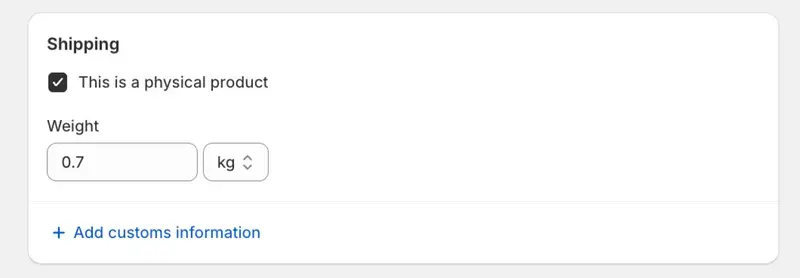
For example, in Shopify, each product list has a weight section. You use a scale to weigh the product in grams, kilograms, etc.
Every time a customer adds an item to their shopping cart, Shopify retrieves the weight of these items and calculates a flat shipping cost based on your rules. This ensures you always charge the correct shipping fee without manual calculations or guesswork.
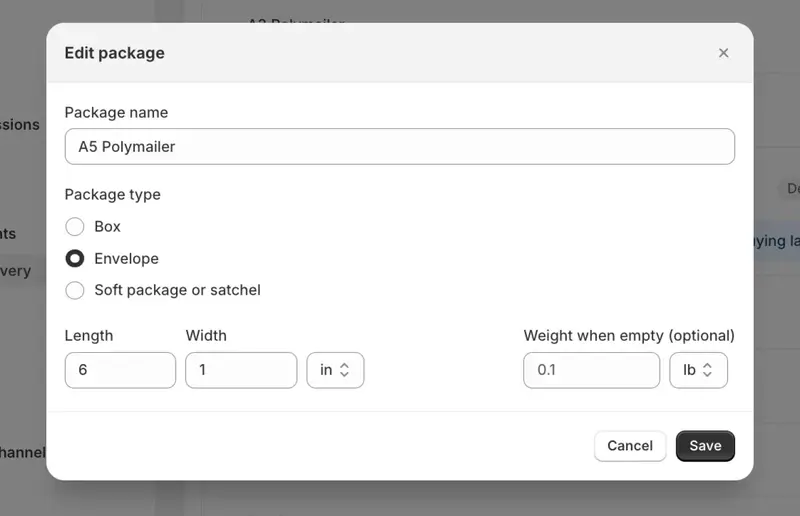
It's also important to measure the size of the boxes used for shipping products. Depending on the products ordered by the customer and the number of items purchased, there may be various box sizes.
Shopify saves the dimensions of these packages and allows it to calculate a flat shipping cost at checkout. This makes the process smoother and more accurate.
Choose lightweight packaging
Packaging significantly impacts shipping costs. Bulky packaging, such as cardboard boxes designed for protection, is heavy, and many carriers charge higher fees for it.
Choosing lightweight materials such as paper or plastic can reduce the flat-rate shipping cost for customers. This not only lowers costs, but customers will also be pleased to see lower shipping prices at checkout.
This is a good opportunity to consider how sustainable your packaging is. A survey shows that 28% of American consumers consider the environmental impact of shipping methods when making online purchases.
Eco-friendly packaging made from corn, sugarcane, or recycled materials allows customers to feel they are contributing to combating climate change. These are lightweight, allowing for flat-rate shipping cost discounts to customers.
Offer expedited shipping and upsell insurance.
A flat shipping rate works because it balances out over time. You might profit from shipping on low-value orders, but you might end up bearing the shipping costs on larger orders.
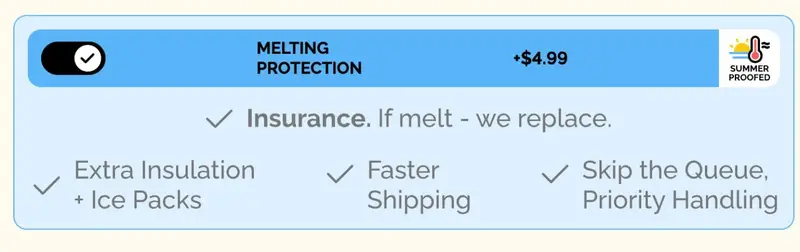
Upselling expedited shipping and shipping insurance can help increase profit margins at checkout. Customers can pay an additional fee to receive their orders faster or have peace of mind knowing that items damaged during transit will be replaced free of charge.
These small added values can make a big difference in your business's profits.
Combine delivery services with promotions.
A flat-rate shipping strategy isn't always the best strategy at every stage or point in your business.
For example, during peak periods such as Black Friday and Cyber Monday, you can stand out from the competition and boost sales during these important shopping periods by offering more attractive flat-rate shipping.
Some carriers may raise prices or extend delivery times during busy periods. Pay attention to changes in carrier delivery costs and adjust your flat-rate shipping rates accordingly to avoid incurring the difference between the price charged to customers and the price on the shipping label.
By paying attention to these changes and proactively reviewing your delivery strategy, you can maintain profitability and a competitive edge in your business regardless of the season.
Synchronization of shipping costs with e-commerce platforms
Many e-commerce platforms have the necessary features for charging flat-rate shipping fees. Shopify, in particular, allows you to save the size of your flat-rate box and record the dimensions and weight of your products, so customers always receive the most appropriate flat-rate shipping fee at checkout.
The setup instructions are as follows:
- From the Shopify admin panel, go to Settings > Shipping & Delivery.
- Click "Manage Fees" next to the shipping profile to which you want to add shipping fees.
- Click "Add Fee" next to the area where you want to add a fee.
- Enter the name and amount of the fee.
- Optionally, you can add weight-based or price-based conditions.
- Click "Add Condition".
- Choose whether to set the conditions based on the order weight or price.
- Enter the minimum and maximum values for the condition.
If you want to avoid the complexities of shipping, you can consider outsourcing all order processing to the Shopify fulfillment network.
This means your store will partner with Flexport, a leading third-party logistics company that handles packaging, shipping, and delivery. This is an excellent option if you want to focus on growing your business and leave your shipping worries to the experts.
Frequently Asked Questions about Flat-Rate Shipping Fees
Which is cheaper: a flat-rate shipping fee or expedited shipping?
Shipping costs are flat-rate and depend on the package size, weight, and shipping method used. Generally, flat-rate shipping is cheaper for packages that fit into a fixed-price box.
Expedited shipping is usually more expensive, but it offers faster delivery times. It's important to compare the costs and benefits of each option to determine what's best for your business and your customers.
How long does it take for shipping to be a flat rate?
Shipping is a flat rate and typically takes several business days. The exact delivery time may vary depending on the shipping carrier. It is important to clearly communicate these delivery times to customers.
Is it cheaper to use a subscription box than to use my own box?
Shipping companies offer boxes with a flat shipping rate, which are cheaper and more predictable than shipping in custom boxes because the carriers don't need to measure or weigh packages for individual pricing.
However, if you have items that don't fit well in standard flat-rate boxes, your packaging method might be better. It's worth comparing the costs and benefits of each approach to determine which is best for your business.
What is the flat rate shipping fee for USPS?
USPS Priority Mail allows you to ship packages that need to arrive within 1-3 business days. Shipping costs start at a flat rate of ¥1,100 for envelopes and ¥1,200 for USPS mailing boxes.
These rates are subject to change, so we recommend checking the latest rates on the USPS website.
Is a flat-rate shipping fee safe?
A flat shipping rate is safe. Customers pay a delivery price based on the weight, size, or volume of their order. However, since customers who shop online are accustomed to free shipping, they may hesitate to purchase if there are additional charges.
To counter this, it's important to set free shipping thresholds that encourage customers to spend more and avoid the flat-rate shipping cost.
Share this article
- Share on Facebook
- Share on X
- Share on LinkedIn