跨境独立站开店
Four successful dropshipping examples and tips for beginners to succeed
This article showcases successful dropshipping case studies. We'll share how successful dropshippers plan, build, and manage their businesses, along with beginner-friendly advice.



This guide explains successful dropshipping examples and methods in an easy-to-understand way for beginners.
Dropshipping is a continuously growing business model, with the global market projected to reach $200 billion by 2033. While the business opportunities presented by dropshipping are clear, the exact methods for making money from it remain unclear.
Many dropshippers struggle to find products that sell, partner with reliable suppliers, and drive traffic to their online stores. Therefore, success stories from dropshipping entrepreneurs can be a valuable source of information.
Therefore, this article will explain successful dropshipping case studies and the tips for success that can be gleaned from them.
Successful Dropshipping Examples
Starting a dropshipping business means entering a rapidly changing industry. With new competitors and strategies emerging every month, let's look at what successful dropshippers have done to stay ahead.
Success Story 1: Finding a niche product and generating revenue in 2 months
Tze Hing Chan co-founded Subtle Asian Treats, a dropshipping store selling bubble tea plush toys and other curated cute merchandise. The business launched during the pandemic and made a profit of $19,000 (approximately 2.8 million yen at the time, the same applies below) in just two months.
However, he didn't achieve success right from the start. He began by selling smartphone cases, and his success came through trial and error.
Knowing the growing popularity of bubble tea in Asia, Tze searched for related products on AliExpress. Initially, he started selling phone cases with a bubble tea motif, but the profit margins were not good.
After that, I found the most profitable product idea: plush toys. I succeeded in finding a niche market for dropshipping: tapioca milk tea plush toys.
Tze also focused on creating its own online store. They wanted to replicate the site designs of Nike and Adidas, so they edited each product photo and wrote compelling product descriptions.
We ensured transparency in the customer's purchase process. Our product pages clearly stated our shipping policy, including delivery times and origin, so that customers could have a clear understanding of the entire process from purchase to receiving their items.
We also built relationships with our followers by interacting with them on Facebook and Instagram. We always provided prompt support to ensure that customers did not feel anxious about whether the site was a scam.
Success Story 2: Efficiently selling using Facebook ads
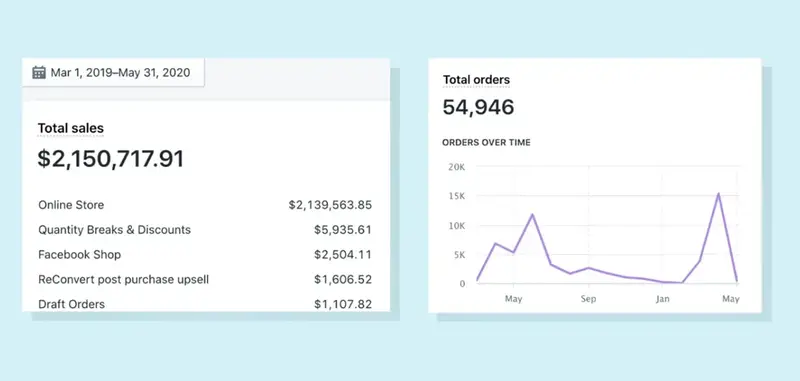
Cole Turner has been growing in the e-commerce business ever since discovering dropshipping at the age of 18. From March 2019 to May 2020, he achieved sales of over $2 million (approximately 300 million yen).
Cole initially test-marketed a variety of products before finally focusing on jewelry. Soon after, he expanded his Facebook advertising and redesigned his store from a general merchandise store to a specialty shop focusing on a single product. That specialty store generated over $75,000 in sales before being sold to another e-commerce entrepreneur.
The third dropshipping store I launched after selling my previous business was able to achieve sales of over $2.1 million (approximately 310 million yen) in just one year.
Cole uses Facebook ads as its primary sales channel. First, they identify two groups interested in the products they sell and run web ads targeting those groups. Once they have gathered enough data, they analyze which group responded best to the ads and increase the budget for the most effective group.
By scaling Facebook ads in this way (maximizing performance by increasing the size of the ad campaign, etc.), we are efficiently reaching our target audience.
To differentiate yourself from competitors and succeed, you need corporate branding and unique sales proposals. Corporate branding is especially important, as it's necessary to make customers feel that you are a trustworthy company, regardless of your suppliers. By continuing to operate your business for a long time, like Cole does, you are more likely to gain customer trust.
One way to build trust with customers is to provide excellent customer support. Cole made sure to clearly state on its website the phone number and available hours for customers to contact them if they have any concerns or questions.
By responding to all inquiries within 30 minutes during business hours and listening to customer feedback, we've made customers feel valued and more likely to make purchases.
Success Story 3: Differentiation through Emotional Marketing
When Andreas Koenig and Alexander Pecka first started dropshipping, their goal was to achieve sales of $1,000 per day. After a year of trial and error, they found a niche market in the pet industry and succeeded in generating $500,000 per month in 2019.
Currently, Andreas and Alexander earn more than $10 million (approximately 1.5 billion yen) per year from their pet business.
By leveraging the emotions of people in niche markets such as pets and children through emotional marketing, we were able to differentiate ourselves from competitors offering similar products and increase sales.
Having learned from a lack of advertising and marketing experience in the early stages of the business, we achieved success by focusing more energy on Facebook ads and organic search traffic.
Andreas and Alexander didn't give up when they first failed. They understood that patience and continuous learning are essential to making money online, and they persevered with their business through trial and error. After investing a lot of time and effort, they succeeded in finding a product that became highly profitable.
Success Story 4: Utilizing Influencer Marketing
Sarah and Audrey started their joint venture in 2019 after each of them had launched their own dropshipping businesses.
While Facebook ads are a common sales channel for successful dropshipping, they saw potential in influencer marketing and were able to generate profits from it.
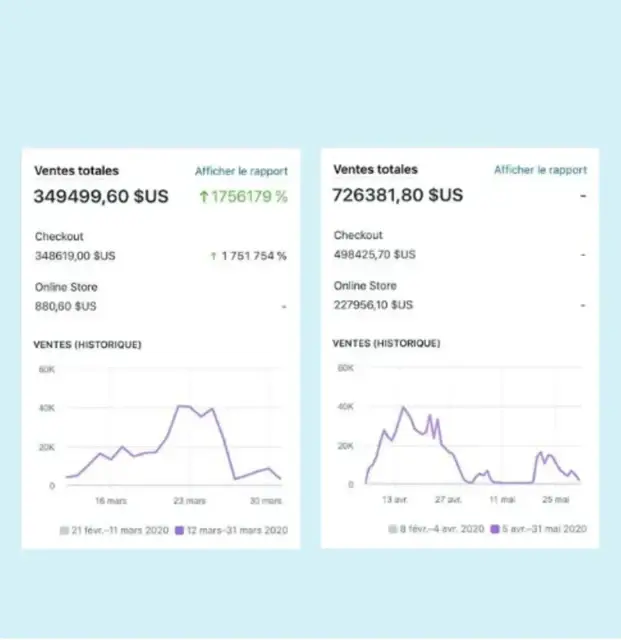
To expand their brand into the US market, the two collaborated with Instagram influencers on product placement (media exposure of products). As a result, they generated over $1 million (approximately 150 million yen) in sales in just a few weeks.
Sarah and Audrey carefully selected their target audience and the marketing channels they preferred. As a result, they determined that Instagram was the best fit and focused their efforts on Instagram marketing.
Influencers can significantly contribute to a business's success. Sarah and Audrey sent out up to 200 emails a day to find influencers who perfectly matched their criteria.
Thus, avoiding agencies and building direct relationships with influencers is a cost-effective approach and highly recommended.
When commissioning influencers for projects, we make sure they use the platform that allows them to reach their followers the most. In Sarah and Audrey's case, we determined that Instagram Stories was the most effective platform, so we used Stories for product placement and promotions.
How to succeed with dropshipping
- Adding value
- Focus on marketing and SEO
- Specialization
- Have a long-term perspective
- Enhancing the customer experience
- Don't get too hung up on the details.
1. Add value
Having a solid plan for how to provide added value to customers is the most important element of success.
In retail, including dropshipping, you're not just offering products. By providing added value such as knowledge, information, and solutions, you can gain the trust of your target audience and increase sales.
Adding this kind of value requires a deep understanding and knowledge of the product, the market, and the target audience's concerns.
If you can't offer added value, such as providing high-quality information, the only way to compete is on price. Price competition is the strategy that led to the success of Walmart, the world's largest US retailer, but it would be difficult to succeed with this strategy in the dropshipping business.
2. Focus on marketing and SEO.
Driving traffic to your e-commerce site is also an effective strategy. If you're starting a business on a limited budget, you'll need to handle SEO, marketing, backlink acquisition, and guest posting (posting your own content on other websites to increase brand awareness) yourself.
This is especially important in the first year. After launching your site, you should dedicate at least 75% of your time to marketing, SEO, and traffic generation for the first four to six months.
Once you've established a solid marketing foundation, you can reduce the amount of work required afterward, so focus on marketing and SEO until you've secured a stable traffic base.
If you're not familiar with marketing or SEO, try referring to the following resources and blogs.
- Moz is one of the most popular online SEO communities. Although it doesn't support Japanese, it's usable by many marketers in Japan as long as you understand SEO-related terminology. The beginner's SEO guide will be a particularly good resource for those just starting out.
- Search Engine Land: The world's leading search information site, featuring the latest news and information on SEO. Numerous new posts are published daily.
- SEOBook: We operate a popular SEO blog and a paid private community for SEO professionals.
- Overseas SEO Information Blog: You can read the latest SEO information from around the world, primarily from the United States, in Japanese.
- We are made of words: A website showcasing copy from various companies. You can find tips for effective and compelling copywriting.
- IT Media: Operated by Sendenkaigi Co., Ltd. It provides a wide range of industry information, including marketing and advertising.
- ferret: We feature the latest industry news and plenty of interviews.
- EC no Mikata: An information site for people and businesses running online shops. We provide a wide range of information completely free of charge.
3. Specialization
Most successful dropshipping stores have something in common: they specialize in a particular product. The more specialized a store is, the more likely it is to be successful.
Specializing in a particular product enhances expertise and authority, making differentiation easier and allowing you to gain a competitive advantage in the market, such as by setting premium prices. Furthermore, it enables more efficient implementation of marketing strategies.
In most cases, specializing in a limited range of products in a dropshipping business is not a disadvantage. As you gain experience dealing with customers, identify the products that are most profitable and offer the most added value. Even high-priced items can still generate conversions.
4. Have a long-term perspective
Building something of value takes time, and the same is true for building a dropshipping business; it requires a long-term commitment and consistent effort. It will take at least a year to generate revenue comparable to the average full-time salary.
It's also important to understand that the first few months are the most challenging. If you're prepared for this, you'll be able to persevere until your business succeeds.
5. Enhance the customer experience
Satisfying customers is the best marketing strategy. Providing excellent service to customers increases the likelihood of word-of-mouth referrals. By offering the best customer experience, you can build a business where repeat customers generate the majority of your revenue.
Handling problems requires careful attention. The biggest risk for dropshipping businesses is fulfillment issues. When problems arise, don't just focus on profits and losses and pass on the costs of resolving the problem, such as return shipping fees, to the customer.
We address problems with a focus on enhancing the customer experience and providing appropriate customer support.
6. Don't get too caught up in the details.
Don't get too caught up in the details. Success isn't determined solely by your company name, logo, theme, or email marketing.
The factors that contribute to business success are added value, marketing, excellent customer service, specialization, and the ability to commit to the long term.
If you're a new seller, choosing a sales platform can be time-consuming, but it's a necessary step as it's a core part of your business. Do your research and make an informed decision. However, don't overthink minor decisions.
The most important steps for successful dropshipping
The most important step to success with dropshipping is actually launching an e-commerce business.
Many successful entrepreneurs, even without absolute confidence in their ability to succeed, start by building an e-commerce site and launching their business. They find products through trial and error, learn from their mistakes, and eventually achieve success. If you want to succeed in the dropshipping business, just like successful entrepreneurs, cultivate your e-commerce business with a long-term perspective, while repeatedly going through trial and error.
Shopify is an e-commerce platform that allows you to easily build a professional website. Dropshipping can also be easily started using their app. A free trial is available, so it's worth giving it a try.
FAQ
What are the key points for success with dropshipping?
Is dropshipping profitable?
Dropshipping can generate revenue. The average profit margin is 15% to 20%, and it's a low-risk way to start because you don't need to hold inventory or handle shipping.
How long does it take for dropshipping to be successful?
It can take several months to over a year for dropshipping to become successful. As success stories show, most dropshippers run several other stores and go through a process of trial and error before achieving business success.
What is the optimal niche market for dropshipping?
- Health and care products
- Clothing and accessories
- Kitchen and groceries
- Interior decor and bedding
- Office supplies
- Tools and renovation-related products
- Camera and smartphone accessories
- Car accessories
Share this article
- Share on Facebook
- Share on X
- Share on LinkedIn